Epilogue
Bibliography with Notes plus Bonus Content
Braddock, David. Britain’s Desert War in Egypt and Libya, 1940-1942: ’The End of the Beginning’. Yorkshire: Pen & Sword Books, 2019. Kindle.
Chapter 1 The Strategic Background to the North African Campaigns, 1940-1942
“The RAF also played a vital part in the Mediterranean at this period, chiefly by its attacks on enemy bases and supply routes, but also in the land battle where, after some early confusion, it gained experience and in the July fighting before Alamein may well have saved the army from further defeat. Like the army and navy the RAF had begun the war in the theatre by being weak and outnumbered but by the skill and determination of its members it overcame the disadvantages of often inferior equipment and established the superiority in the air that the army needed before it could defeat Rommel, and which was essential the the survival of Malta.”
Braddock, David. Britain’s Desert War in Egypt and Libya, 1940-1942: ’The End of the Beginning’. Yorkshire: Pen & Sword Books, 2019. Kindle.
Chapter 6 The Second British Offensive
“…perhaps the most valuable lesson from ‘Battleaxe’ was the need to study and resolve the problems of integrating the efforts of the two services [army/air] before major actions were fought in the future…full benefits would not to be forthcoming until 1942.
“The British army thus compared badly with Rommel’s in three ways. The enemy were well trained in the technique of mobile armoured warfare…Their tanks were reliable, and their ability to fire high explosive as well as armour-piercing ammunition, had a distinct advantage over the British, to whom the appearance of the 88 mm gun in an anti-tank role came as an additional and unwelcome surprise. And the German system for the recovery of damaged tanks was greatly superior to that of the British.”
Delve, Ken. The Desert Air Force in WWII: Air Power in the Western Desert 1940-1942. South Yorkshire: Pen & Sword Books, Ltd, 2017. Kindle.
Chapter 1 Introduction
“‘The continuous and very heavy attacks of the R.A.F.,’ said Rommel, ‘absolutely pinned my troops to the ground and made impossible any safe deployment or advance according to schedule.’ And General Bayerlein, Chief of Staff of the Afrika Korps, afterwards declared: ‘Your air superiority was most important, perhaps decisive…We had very heavy losses, more than from any other cause.’”
Judd, Brandon. The Desert Railway: The New Zealand Railway Group in North Africa and the Middle East during the Second World War. Auckland: Publishing Press, 2003. https://www.nzsappers.org.nz/wp-content/uploads/2020/04/The-Desert-Railway.pdf
Chapter 20 THE LAST ADVANCE
“General Montgomery stated: ‘Well, now it’s railways versus Rommel.’ Once again the New Zealand railwaymen found their services in the desert campaign indispensable.”
Moorehead, Alan, The Desert War: The Classic Trilogy on the North African Campaign 1940-1943. London: Aurum Press Ltd, 2013. Kindle.
BOOK TWO—A Year Of Battle: The Year of Auchinleck 1941-42. Three: October in the Desert
“…the old days of piratical raids were gone. The desert was filling up with thousands upon thousands of armed men…The new battle when it came would no longer be a border skirmish but a full-scale test of strength between the Germans and the British.”
Moorehead, Alan, The Desert War: The Classic Trilogy on the North African Campaign 1940-1943. London: Aurum Press Ltd, 2013. Kindle.
BOOK ONE—The Mediterranean Front: The Year of Wavell 1940-41: Seven
“It was the British now who were on long lines of communications with all the problems of water and petrol supply before them.”
Moorehead, Alan, The Desert War: The Classic Trilogy on the North African Campaign 1940-1943. London: Aurum Press Ltd, 2013. Kindle.
BOOK TWO—A Year Of Battle: The Year of Auchinleck 1941-42. Six: January 1943 in Retreat
“The trouble was that the further you got away from your base, the nearer the retreating enemy got to theirs. Consequently as you got weaker, the enemy got stronger.”
Rainier RE, Major Peter. Pipeline to Battle: An Engineer’s Adventures with the British Eighth Army. Auckland: Pickle Partners Publishing, 2013. Kindle.
PART TWO Chapter 7: The Flap
“…It was an organized retreat. Attempts at undue thrusting by the enemy were severely punished. The sappers did a great job of demolition and actually succeeded in salvaging practically all the pumping equipment along the nearly 500 miles of pipeline which the retreat traversed. The pipeline and the railway where systematically demolished to deny their use to the enemy. Little worth having that was in our numerous supply dumps between Tobruk and Alamein line was left to the enemy, except Tobruk itself…our fortress kept him going almost throughout his stay in Egypt.”
Bonus Illustrations
Bonus Content

Shepheard’s Hotel Part 1
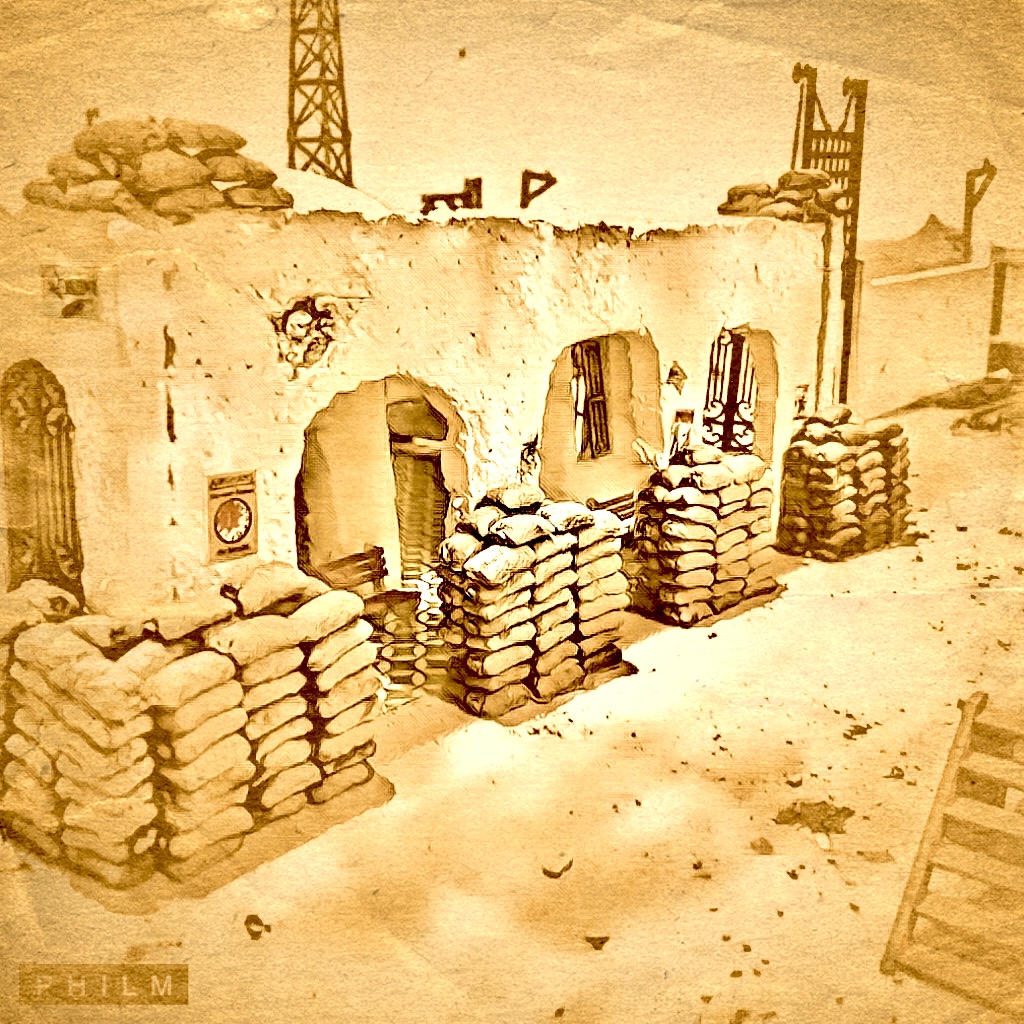
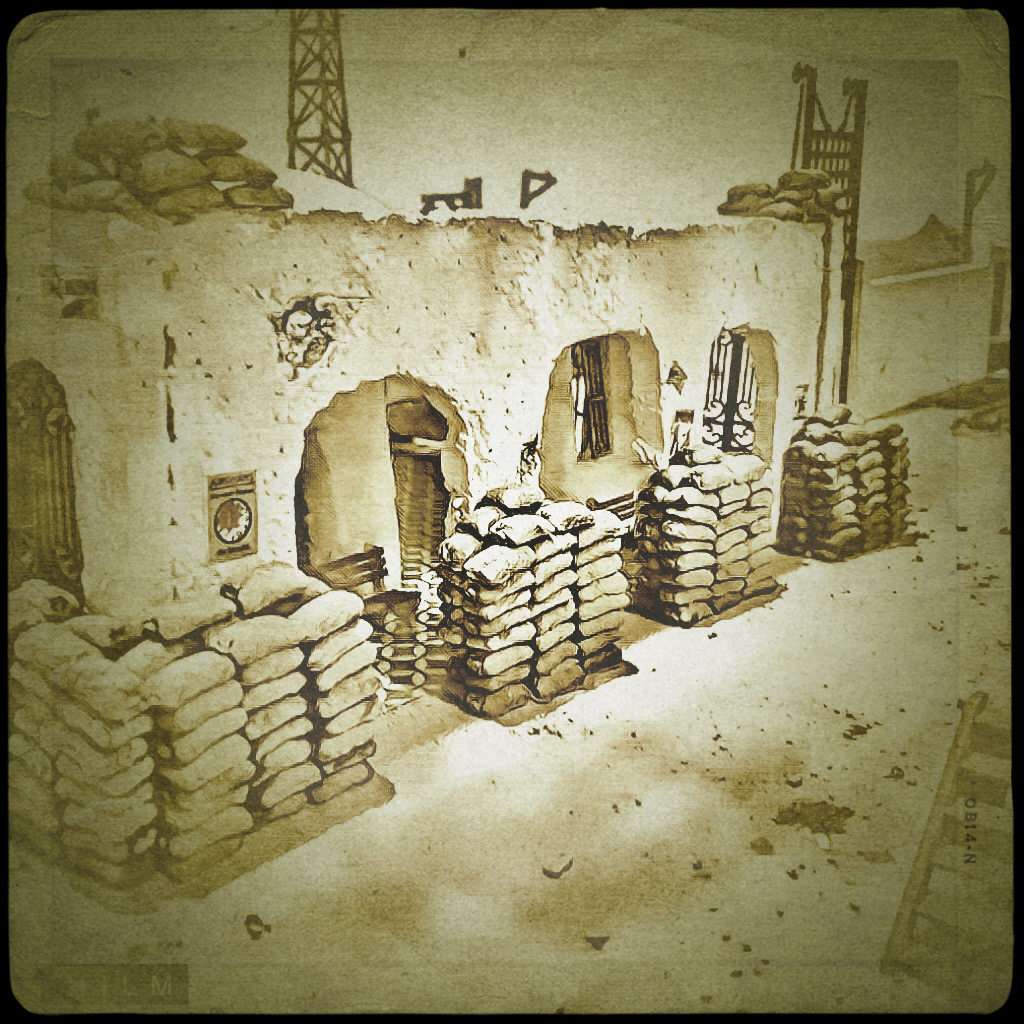
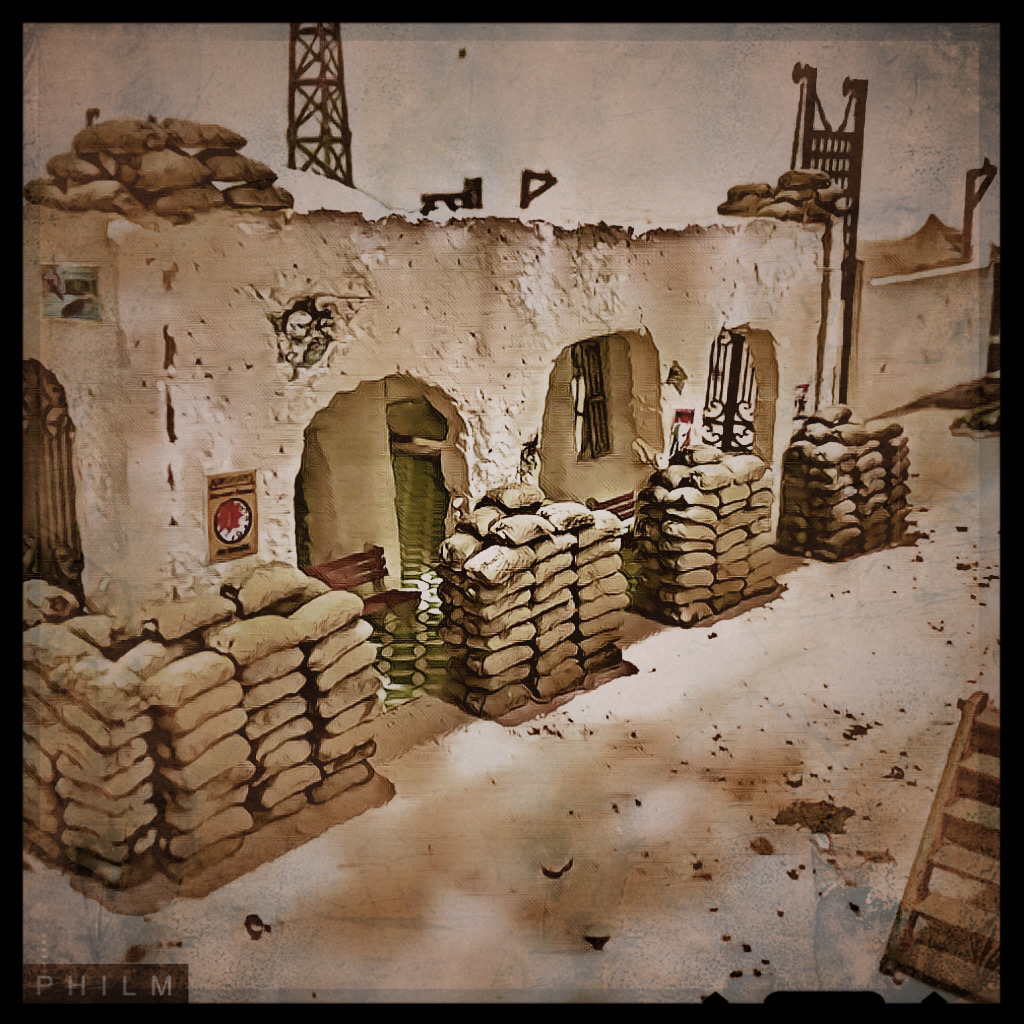
An artist imagines the entrance to the terrace at Shepheard’s Hotel in Cairo, 1942.
So many British and Commonwealth soldiers came to Shepheard’s, as well as members of the exiled Greek government, the global press, as well as “beautiful and elegant women,” some complained that the war was being fought out on the terrace, not in the desert!
Others suggested it took so long to get a drink at the “long bar,” they should just let Rommel through. He would get held up waiting for his order. RAF pilots and crew claimed Shepheard’s as their own, and it was said if you waited around long enough you would meet someone you knew.
In June of 1942, one rumor declared that Rommel was so close to winning the war, he had already reserved himself a room at Shepherd’s. On July 1, 1942, the British were busy burning documents to keep them out of enemy hands, on what became known as “Ash Wednesday.” Partially burnt sensitive documents floated in the streets of Cairo.
As the German’s began their assault on British positions at El Alamein, pro Axis Egyptians in Alexandria and Cairo began preparations to change restaurant signs and menus into German, and Italian families hung out bunting to welcome their troops.
Shepheard’s Hotel Part 2
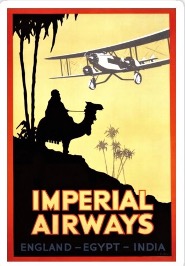
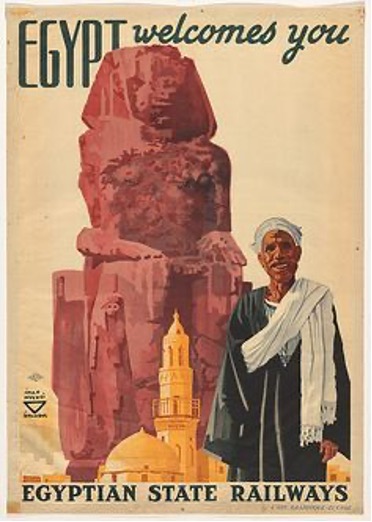
The British military occupied Egypt in 1882 to protect financial interests in the Suez Canal. It was not unusual to know an uncle, cousin, father, or grandfather who had done colonial service in Egypt, India, the Far East.
Shepheard’s, originally opened in 1841 as the “Hotel des Anglais” (English Hotel), eventually included one of the first offices for Cook’s Travel in the lobby. Egypt was one of the first international destinations open to European tourists and became a destination for “fun in the sun” in the late 1800s.
Once archeologist Howard Carter discovered the tomb of King Tut on Nov. 26, 1922, Egypt’s claim as a global tourist destination was carved in stone. Early visitors were even allowed to climb the pyramids!
The claim check room at Shepheard’s was legendary for holding on to packages for years–even decades–and producing them when claimed! In the back of the hotel there was a garden with exotic plants and award-winning roses. Next to the garden was a petting zoo with camels, Arabian horses, two pandas from China, and a dozen gazelles.
In 1952, Shepheard’s was destroyed by fire during anti-British riots that eventually lead to Egyptian independence.
https://defenceindepth.co/2017/07/03/remembering-the-crucial-days/
https://www.newarab.com/news/egypt-unearths-ancient-alexandria-artefacts-hidden-wwii
https://www.helleniccomserve.com/januswartime.html
 WWII in North Africa