May 1941: Lend-Lease and the P-40 Tomahawk
Bibliography with Notes plus Bonus Content
Guttman, Robert. CURTISS P-40 WARHAWK: ONE OF WW II’S MOST FAMOUS FIGHTERS. HISTORY NET. https://www.historynet.com/curtiss-p-40-warhawk-one-of-ww-iis-most-famous-fighters/
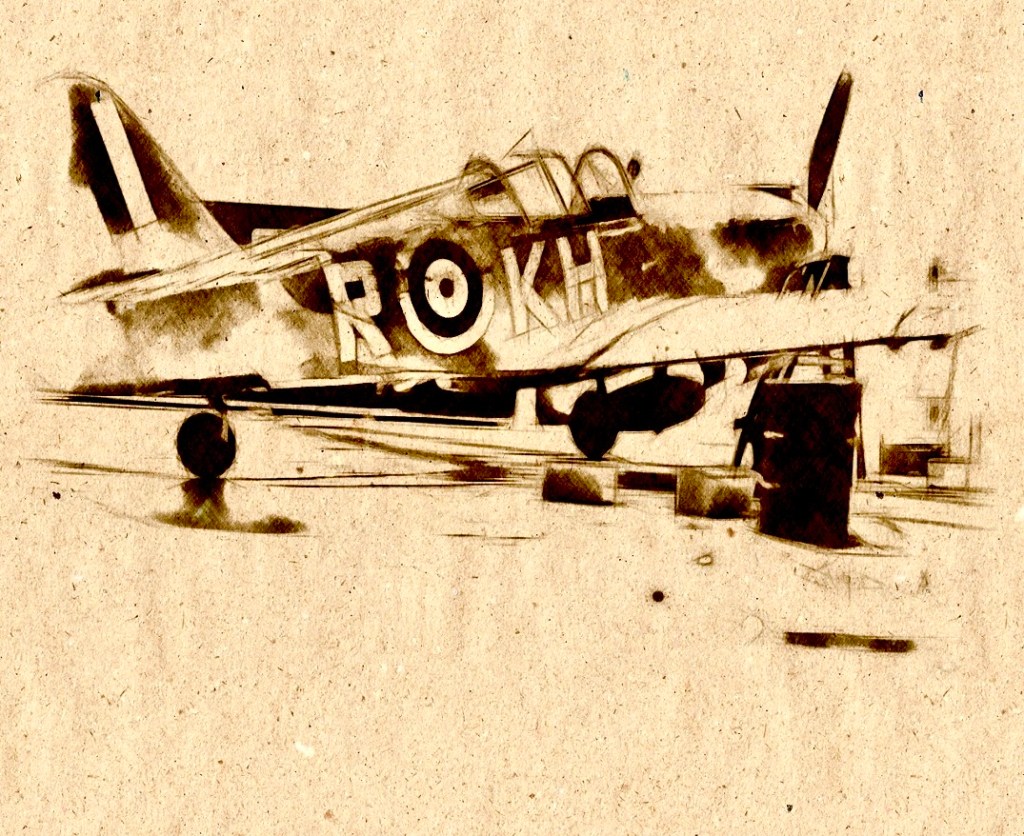
“By May 1941 Tomahawks were also operating in the Middle East, eventually serving in that theater with Australian and South African fighter squadrons as well as the RAF.”
“…June 8, helping to destroy a Dewoitine D.520 fighter and damage three others at Rayak airfield. Elsewhere on that same day, two of No. 250 Squadron’s Tomahawks drew first blood for the P-40 in the air when
they shot down an Italian Cant Z.1007bis reconnaissance plane five miles northwest of Alexandria, Egypt.”
Hickman, Kennedy. World War II: Curtiss P-40 Warhawk. Thoughtco.com.
https://www.thoughtco.com/curtiss-p-40-warhawk-2360498
“…Entering combat, the P-40’s lack of a two-stage supercharger proved a great hindrance as it could not compete with German fighters such as the Messerschmitt Bf 109 at higher altitudes. In addition, some pilots complained that the aircraft’s armament was insufficient. Despite these failings, the P-40 possessed a longer range than the Messerschmitt, Supermarine Spitfire, and Hawker Hurricane as well as proved capable of sustaining a tremendous amount of damage. Due to the P-40’s performance limitations, the RAF directed the bulk of its Tomahawks to secondary theaters such as North Africa and the Middle East.”
Jackson, W.G.F. . The Battle for North Africa 1940-1943. New York: Mason/Charter Publishers, 1975, p. 49.
“Roosevelt’s determination and persuasive powers drove the Lend-Lease Bill through Congress until it became law in March 1941.”
Shores, Christopher F., and Giovanni Massimello with Russel Guest. A History of the Mediterranean Air War, 1940-1945: Volume One: North Africa. London: Grub Street, 2012. Kindle.
CHAPTER 5 ENTER THE LUFTWAFFE
“Much better news was the arrival of the first 12 Tomahawks, together with advice that 17 more were underway and another 145 were in crates at Takoradi, being assembled as rapidly as possible. Unfortunately, these aircraft were suffering problems both with engines and armament. A few more Hurricanes also arrived, but at this stage Middle East could only count something less than 50 of these fighters serviceable (not including Malta.)”
Bonus Illustrations
Bonus Content
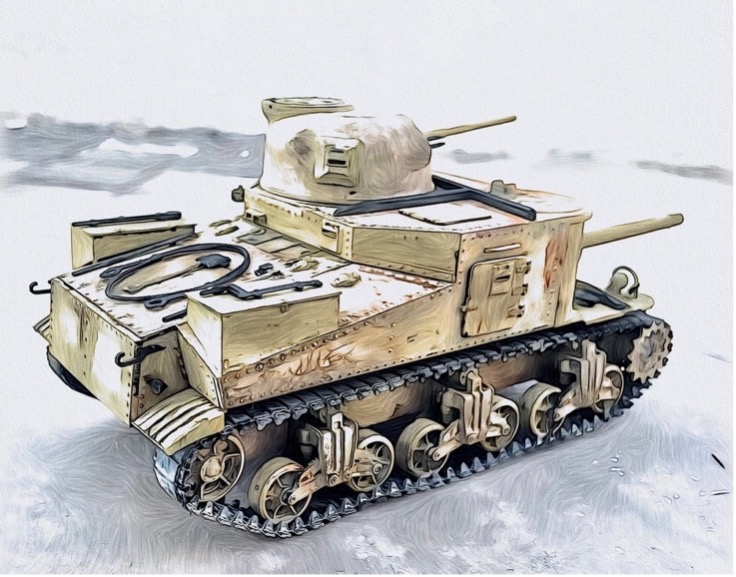
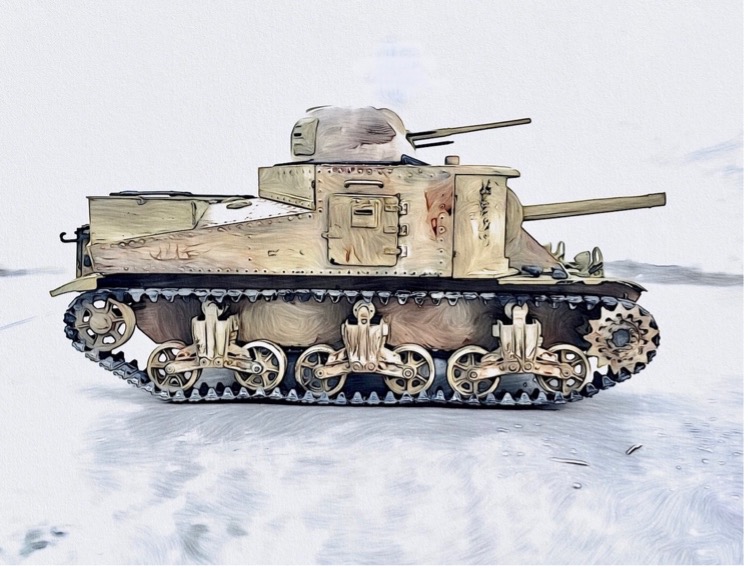
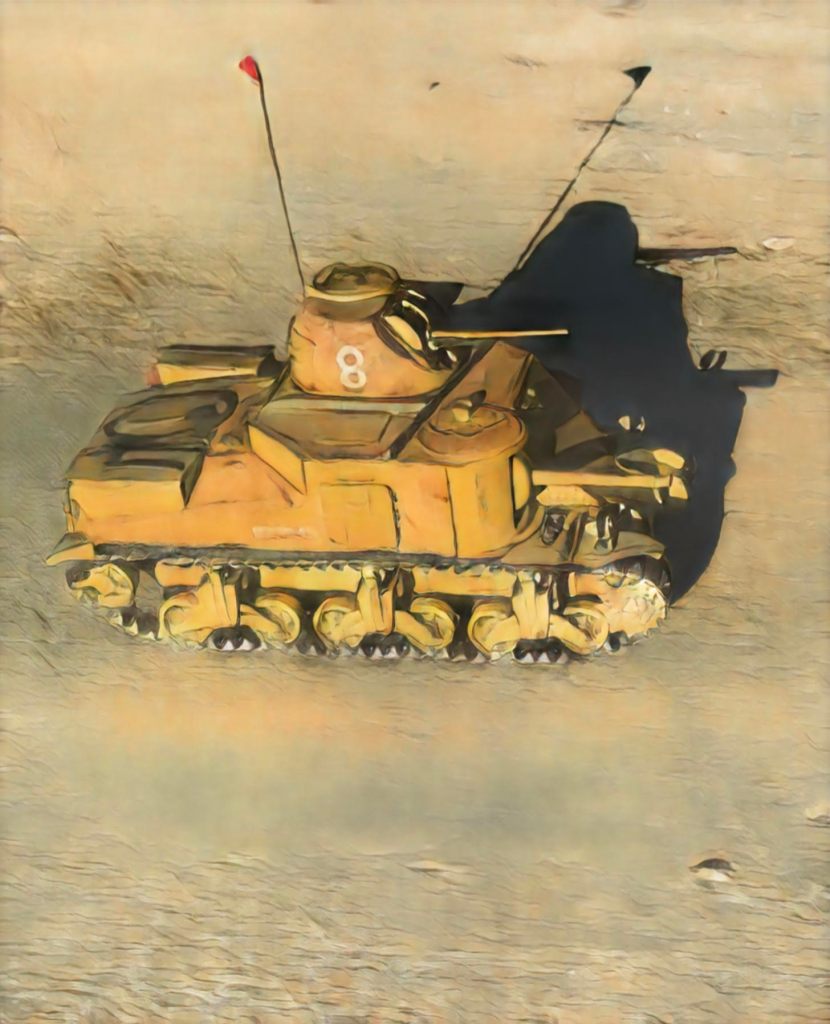
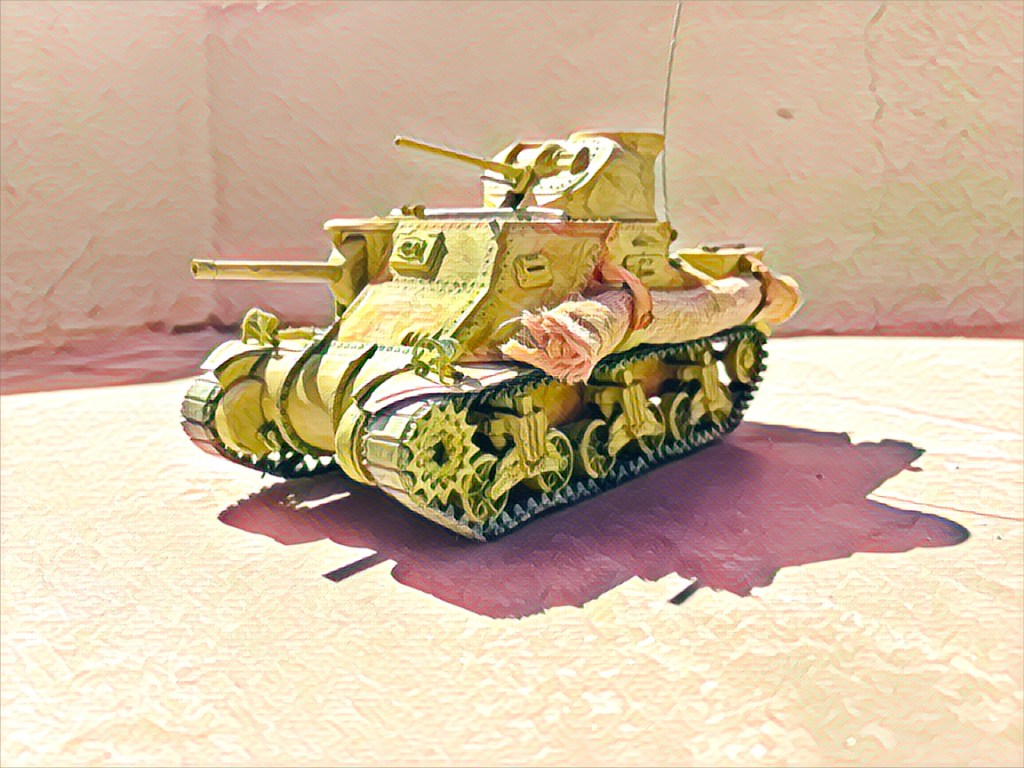
Lend-Lease: The M3 General Grant or is that a Lee?
The American military was unprepared for the declaration of war immediately following Japan’s sneak attack on Pearl Harbor.
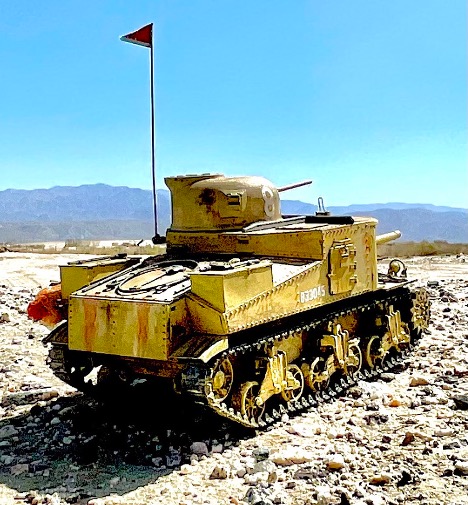
US manufacturing had only produced a small number of tanks. The M3 General Lee was a stopgap offering in the desert in early 1942, while the soon-to-be ubiquitous M4 Sherman was designed and produced.
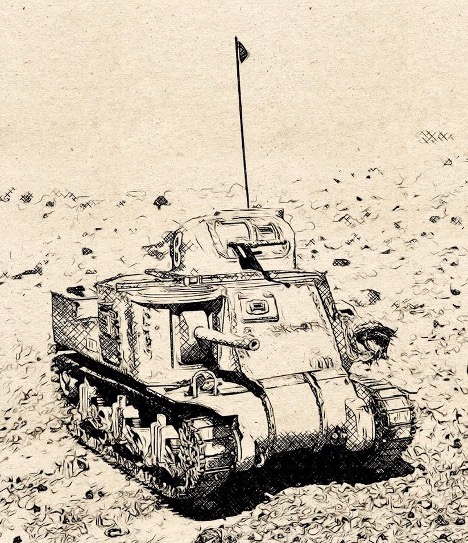
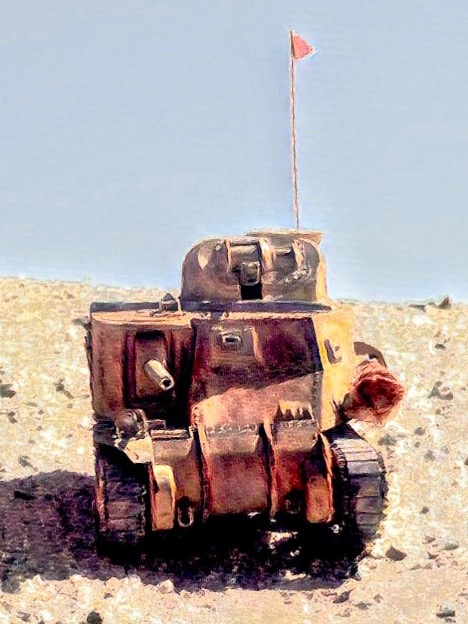
The American version (Lee) had an additional machine gun on the top turret, making the tank ten-feet tall. This made the tank difficult to hide “hull down” with only the gun exposed, ready to fire.
The British asked to make changes. They preferred their tank commander in the top turret manning a radio, not a machine gun. A radio shelf was added inside the turret, along with six slots for firing a pistol. The Grants had a new rounder turret with no machine gun up top. (The photos are of a 1:35 Lee modified.) A few other changes, and the General Grant was born.
The top gun was under powered but could rotate freely. The hull gun was powerful and could dispatch a German Tiger III. The problem was the gun and its very limited traverse left-to-right, requiring the entire tank itself to aim at the target. That did the job for a time, giving the Ford-inspired assembly lines time to crank out the Shermans in 1942.
Some Grants served in the South Pacific.
 WWII in North Africa