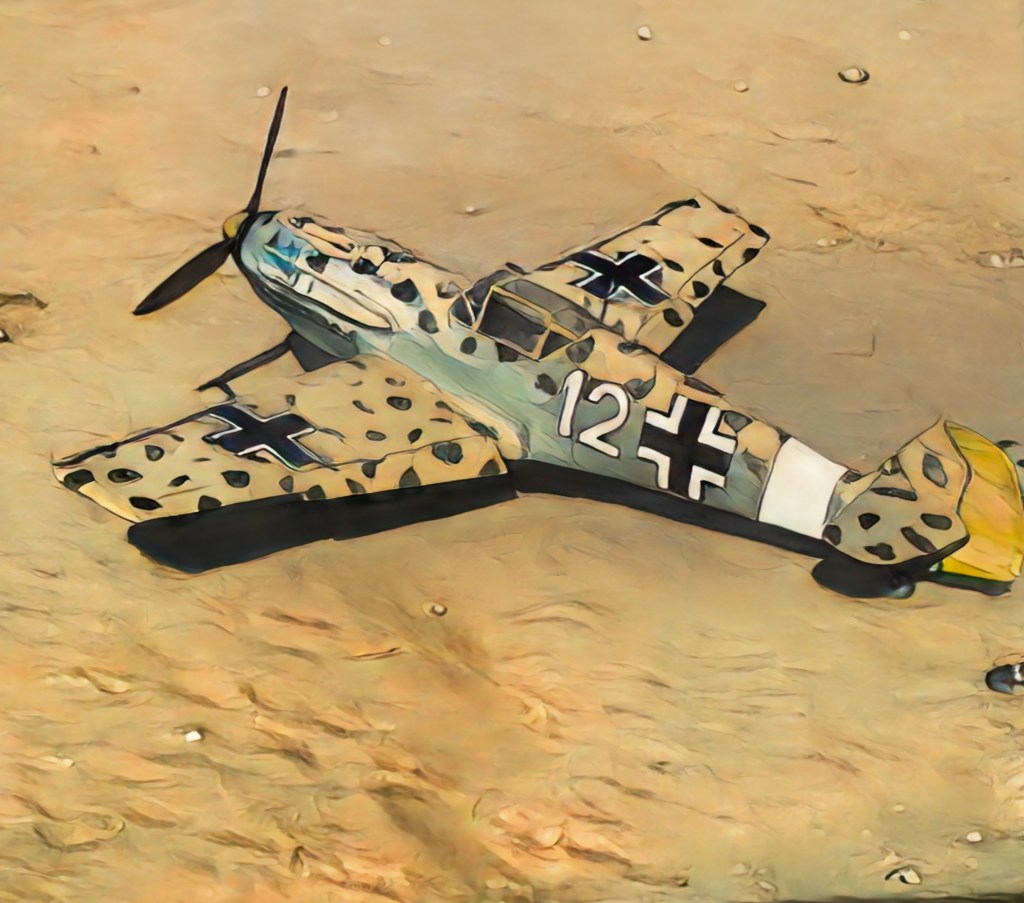
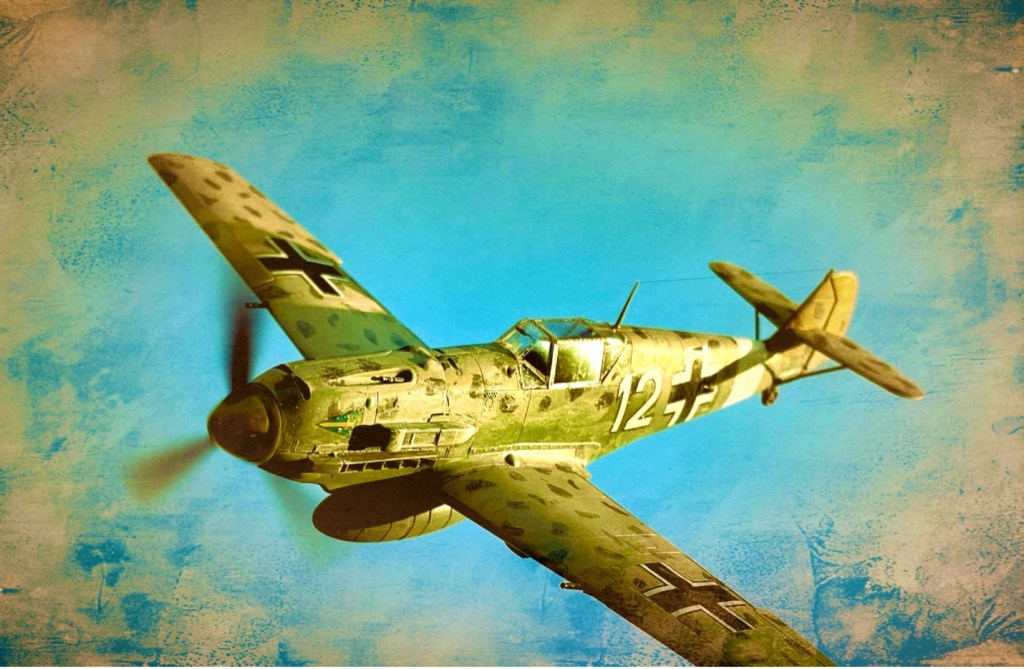
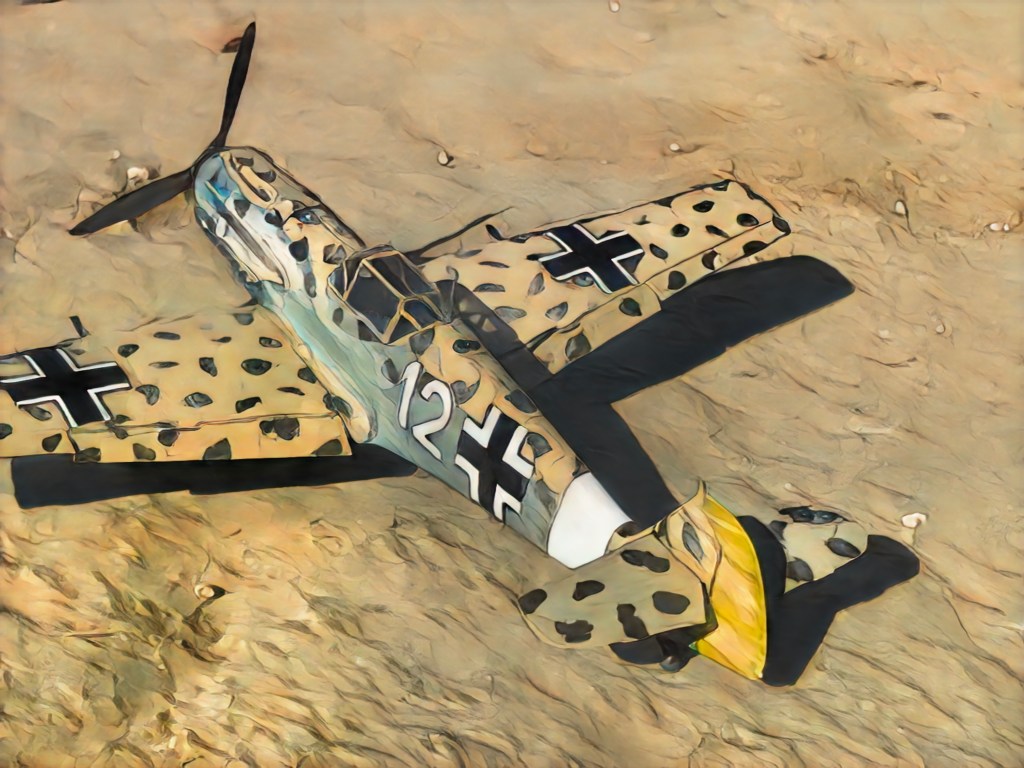
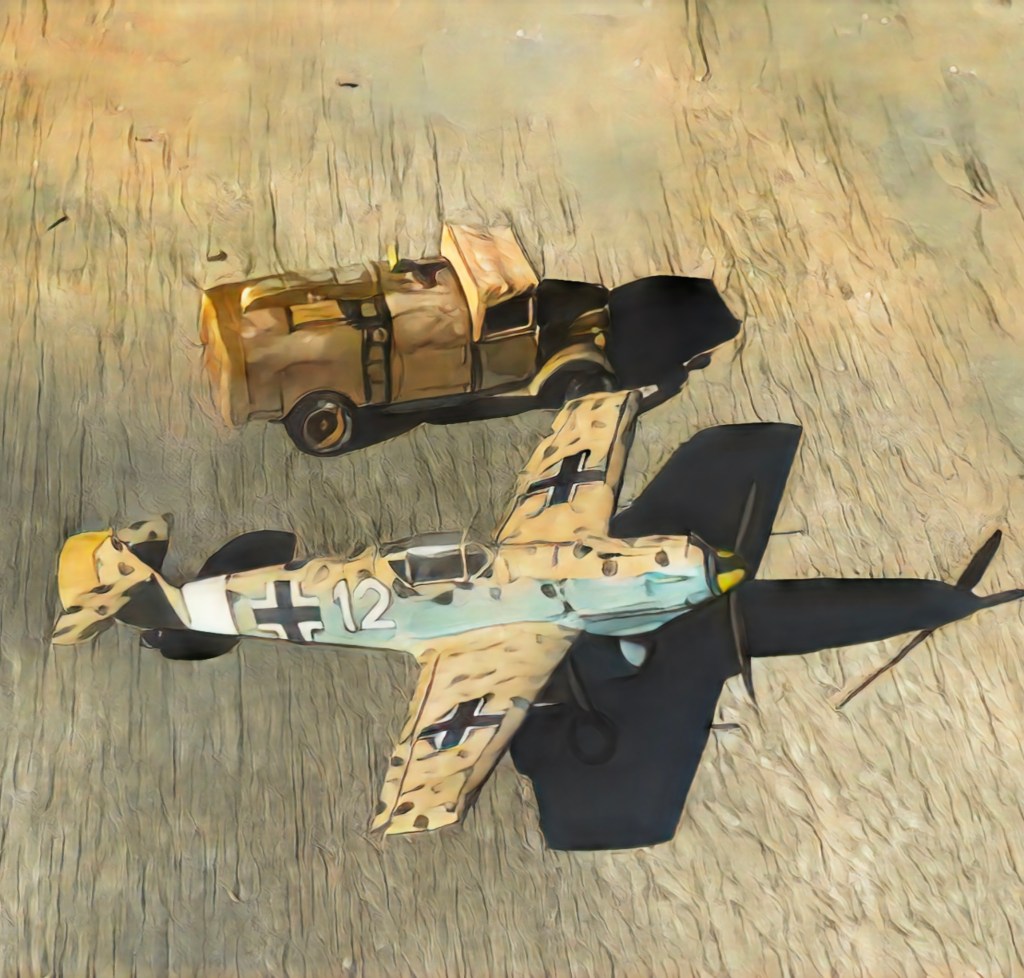
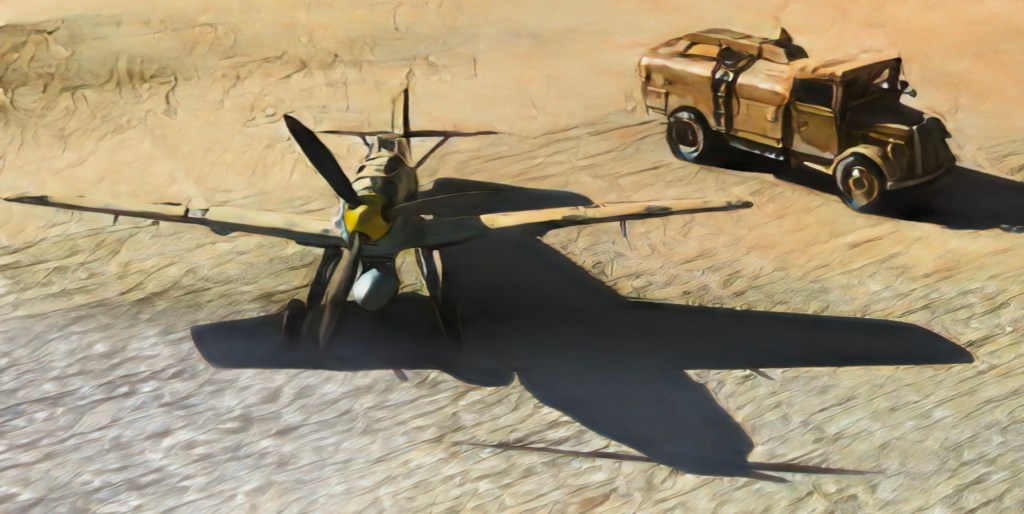
April 18, 1941: Luftwaffe Bf 109 Fighters Arrive
Bibliography with Notes plus Bonus Content
Bickers, Richard Townshend, The Desert Air war: a gripping historical account of the RAF’s role in North Africa during World War II. UK: Lume Books, 2018. Kindle.
Chapter Four
“This was the day when a new predator, menacing, powerful and confident, arrived in North Africa: the Messerschmitt 109E, whose speed and rate of climb exceeded the Hurricane MK I’s by 38 m.p.h. and approximately 1,000 feet a minute. It was armed with two machine guns and 2 20mm cannon.”
Delve, Ken. The Desert Air Force in WWII: Air Power in the Western Desert 1940-1942. South Yorkshire: Pen & Sword Books, Ltd, 2017. Kindle.
Chapter 3: From Victory to Defeat to Stalemate
“On 18 April the first Luftwaffe single-engine fighters arrived in North Africa, Bf 109s…landing at Ain-el-Gazala…”
Chapter 42 Plus Bonus
Roba, Jean-Louis. Luftwaffe in Africa, 1941-1943
(Casemate/Illustrated). Havertown, PA: Casemate Publishers, 2019. Kindle.
4. Rommel on the Offensive
“‘Jochen’ Marseille…was killed attempting to bail out of his machine…returning from an uneventful sortie, his engine suffered a failure and the cockpit started to fill with smoke. Marseille rolled the fighter over on its back, jettisoned the canopy and dropped clear. But he struck the tailfin and was knocked out, plunging to the ground…”
Shores, Christopher F., and Giovanni Massimello with Russel Guest. A History of the Mediterranean Air War, 1940-1945: Volume One: North Africa. London: Grub Street, 2012. Kindle.
CHAPTER 6 REVERSES AND REINFORCEMENTS
“…the excellent Bf 109E was without question superior to the Hurricane in many ways—notably in speed, altitude performance and armament. Only in manoeuvrability did the British fighter retain an edge. Indeed, the Hurricane in the Middle East was also fitted with a large Vokes air filter under the nose to reduce the impact of the ingestion of sand and dust. This had the effect of degrading the performance below that which had been achievable at home. The Messerschmitt on the other hand was fitted with a considerably smaller, neater and less drag-inducing filter, which did not have a similar detrimental effect. The Bf 109E was soon to become the scourge…”
Shores, Christopher F., and Giovanni Massimello with Russel Guest. A History of the Mediterranean Air War, 1940-1945: Volume One: North Africa. London: Grub Street, 2012. Kindle.
CHAPTER 5 ENTER THE LUFTWAFFE
“Elements of the 5th Panzer Division began to move to Africa 20 March, the next day a crew of a 55 Squadron Blenheim reported seeing a Messerschmitt Bf 109 in flight over Axis territory. This ominous report was not confirmed, but gave a foretaste of what was soon to occur.”
Shores, Christopher F., and Giovanni Massimello with Russel Guest. A History of the Mediterranean Air War, 1940-1945: Volume One: North Africa. London: Grub Street, 2012. Kindle.
CHAPTER 6 REVERSES AND REINFORCEMENTS
“The Gruppe was equipped with the BF 109E type; the ‘Emil’ was superior to all enemy fighter aircraft then operating in North Africa and the initial successes gave the pilots the feeling of safety and superiority in numbers…”
Shores, Christopher F., and Giovanni Massimello with Russel Guest. A History of the Mediterranean Air War, 1940-1945: Volume One: North Africa. London: Grub Street, 2012. Kindle.
CHAPTER 6 REVERSES AND REINFORCEMENTS
“‘The impact of the Messerschmitt 109E was very great. These aircraft had a very significantly better performance than the Hurricane in climbing, diving and level speed. The manoeuvrability of the two aircraft was comparable. Our results against the Italians had been so good that perhaps we were a little over-confident and had not sufficiently absorbed the tactical lessons of the war in Europe. This all combined to give us a very rough time for the first few weeks after the Messerschmitts arrived.’”
Bonus Illustrations

 WWII in North Africa