January 10, 1941: The Germans Arrive
Bibliography with Notes plus Bonus Content
Bickers, Richard Townshend. The Desert Air War: a gripping historical account of the RAF’s role in North Africa during World War II. UK: Lume Books, 2018. Kindle.
Chapter Four
“…The courage of those who had to fly Stukas must have been fractured, and all the more fragile because of their initial easy tasks in killing and terrorizing civilians in Poland, the Low Countries and France. On the morning of 5 April three Hurricanes of 3 RAAF and four of 73 shot down five dive bombers of nine they encountered. That evening two 73 Squadron Hurricanes and seven from 3 RAAF intercepted twelve and destroyed nine. It was not only the Hurricane pilots who potted them like clay pigeons: six days later the ack-ack gunners at Tobruk brought three down.”
Bickers, Richard Townshend, The Desert Air war: a gripping historical account of the RAF’s role in North Africa during World War II. UK: Lume Books, 2018. Kindle.
Chapter Three
“…Britain’s Prime Minister ordered Wavell on 12 February, 1941, to stop O’Conner’s advance, to leave the smallest possible holding force in Cyrenaica and to make ready to send the bulk of his army to Greece…The Germans were coming…
“On 11 February Rommel called in at Sicily to confer with Geisler. On the 12th he arrived at Tripoli. On the 14th the advance guard of his force, a battalion of light infantry and an anti-tank unit, came ashore.
“On 18 February, 1941, Hitler created the Afrika Korps and decided to send Rommel a full Panzer Division and other reinforcements.”
Bierman, John and Colin Smith. War Without Hate. New York: The Penguin Group, 2002, p. 59.
“…who announced their arrival in the region with a devastating attack on a convoy of British merchant ships as it approached Malta from the West. The convoy was escorted by a powerful naval force including (HMS) Illustrious which the German Stukas chose as their prime target. Within minutes they had scored half a dozen direct hits on her with armor-piercing 500- and 1,000-bombs leaving the carrier a smoking, red-hot ruin. ‘There was no doubt we were watching experts,’ conceded Cunningham (Mediterranean Fleet Commander, Admiral Sir Andrew Cunningham) ‘…we could not but admire the skill and precision of it all.’”
Delve, Ken. The Desert Air Force in WWII: Air Power in the Western Desert 1940-1942. South Yorkshire: Pen & Sword Books, Ltd, 2017. Kindle.
Chapter 3: from Victory to Defeat to Stalemate
“The main German enemy—Ju 87 Stuka escorted by Bf 109. The Stukas had established a psychological supremacy over ground forces and it was essential for the Allies to counter this…as they soon did with a number of ‘Stuka Parties.’”
Jackson, W.G.F. The Battle for North Africa 1940-1943. New York: Mason/Charter Publishers, 1975, p. 60.
“The dominance achieved by the Luftwaffe came at just the right time for the Axis, making it practical to ship Italian and German replacements to Tripoli to shore up Graziani’s tottering position in Libya. It could hardly have come at a worse time for the British. Two more month’s freedom from German intervention would have seen the final expulsion of the Italians from Africa and the end of the North African campaign.”
Latimer, Jon. Operation Compass. Oxford: Osprey Publishing, 2000. Kindle.
Chapter: Aftermath
“The day before Wavell had received instructions from the Defense Committee to send an expeditionary force to Greece before the Germans invaded…
“Many of the units from Cyrenaica…were to find themselves sent to Greece where they were in turn routed in the German invasion two weeks later…
“…because on the same day they were ordered to halt, there arrived in Libya another fox—Erwin Rommel, soon to be followed by the first elements of the Deutsches Afrikakorps.”
Moorehead, Alan. The Desert War: The Classic Trilogy on the North African Campaign 1940-1943. London: Aurum Press Ltd, 2013. Kindle.
BOOK ONE—The Mediterranean Front: The Year of Wavell 1940-41: Sixteen
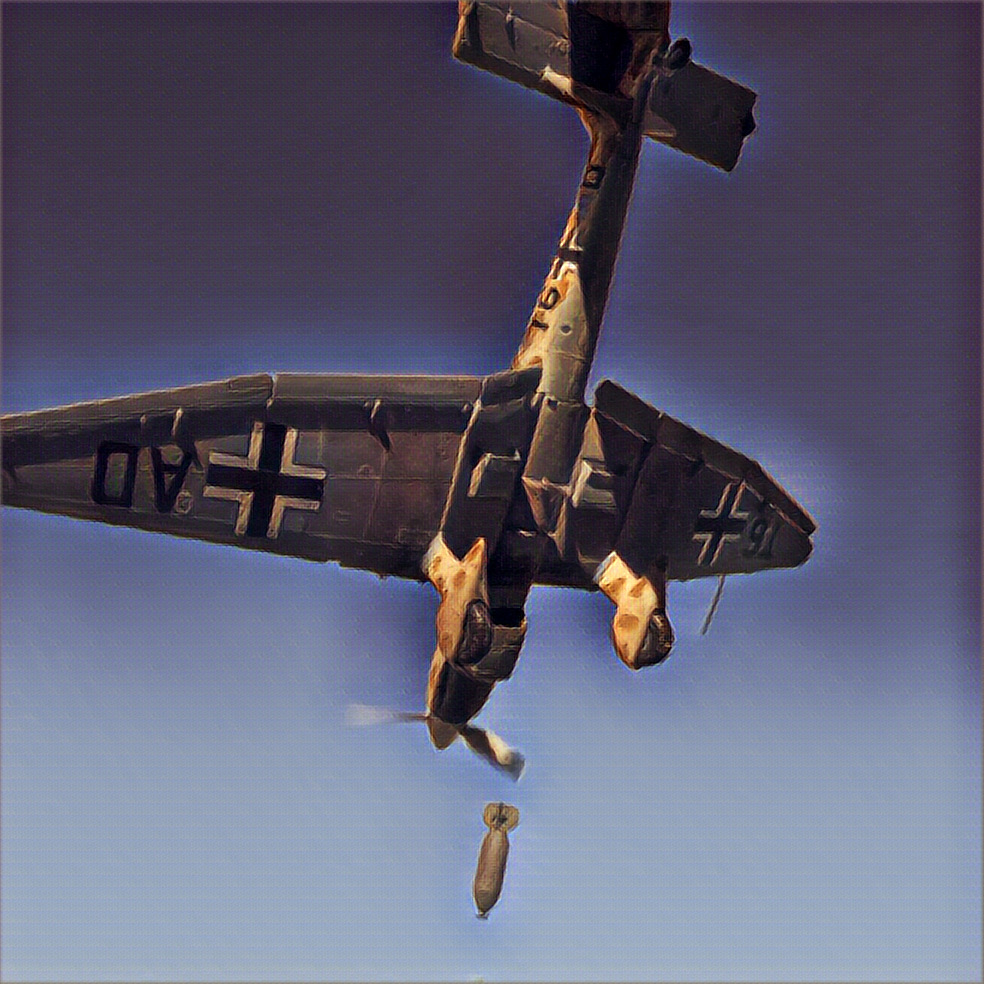
“The Stuka was the new artillery—the mechanical device that carried the missile over the mountains to the target and dropped it there. The Stuka pilot saw what he wanted to hit, and went at it in a perpendicular dive at so sickening a rush that he sometimes fainted. To guard against this, the Germans had fitted the Stukas with a device that automatically released the bombs and pulled the plane out of its dive, keeping it airborne until the pilot had recovered.”
Shores, Christopher F., and Giovanni Massimello with Russel Guest. A History of the Mediterranean Air War, 1940-1945: Volume One: North Africa. London: Grub Street, 2012. Kindle.
CHAPTER 4 OPERATION COMPASS
“…advising the loss of the cruiser HMS Southampton and serious damage inflicted on the carrier HMS Illustrious by German dive-bombers from Sicily which signaled the start of German involvement in the Mediterranean and Middle East generally.”
Shores, Christopher F., and Giovanni Massimello with Russel Guest. A History of the Mediterranean Air War, 1940-1945: Volume One: North Africa. London: Grub Street, 2012. Kindle.
CHAPTER 5 ENTER THE LUFTWAFFE
“Recalled Plt Off Bill Eiby: ‘By now the bloody army was in full flight. They retreated and the Jerries were knocking hell out of our convoys…Soon after they withdrew the Stukas as the Hurricane could shoot them down like flies.’”
Shores, Christopher F., and Giovanni Massimello with Russel Guest. A History of the Mediterranean Air War, 1940-1945: Volume One: North Africa. London: Grub Street, 2012. Kindle.
CHAPTER 3 GRAZIANI MAKES A MOVE
“November saw the first departures of RAF units from Egypt to Greece….Morally, there was an imperative upon the British to go to the aid of the Greek nation, which had been an ally during the previous war…Winston Churchill was extremely well-disposed to the point of insistence.”
Stockings, Craig. The Battle of Bardia. (Australian Army Campaigns Series Book 9). Sydney: Big Sky Publishing, 2011. Kindle.
EPILOGUE
“The speed and magnitude of XIII Corps’ success at Bardia and beyond raised serious strategic risks for Germany. As a consequence, five days after Beda Fomm, and the same day that XIII Corps was formally ordered to halt, Lieutenant General Irwin Rommel arrived in Tripoli ahead of his newly constituted ‘Africa Corps’…The British judged a German attack before May unlikely. Rommel, however, began his advance in March.”
Bonus Illustrations
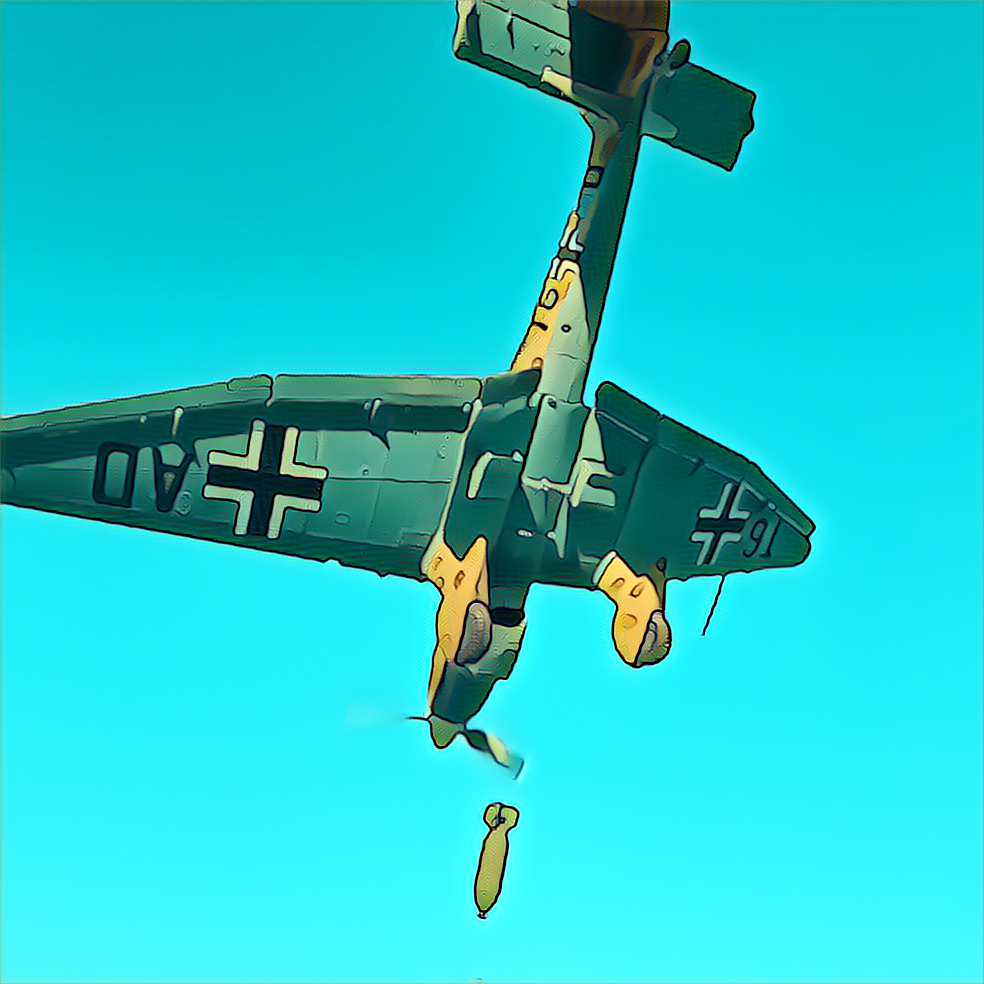
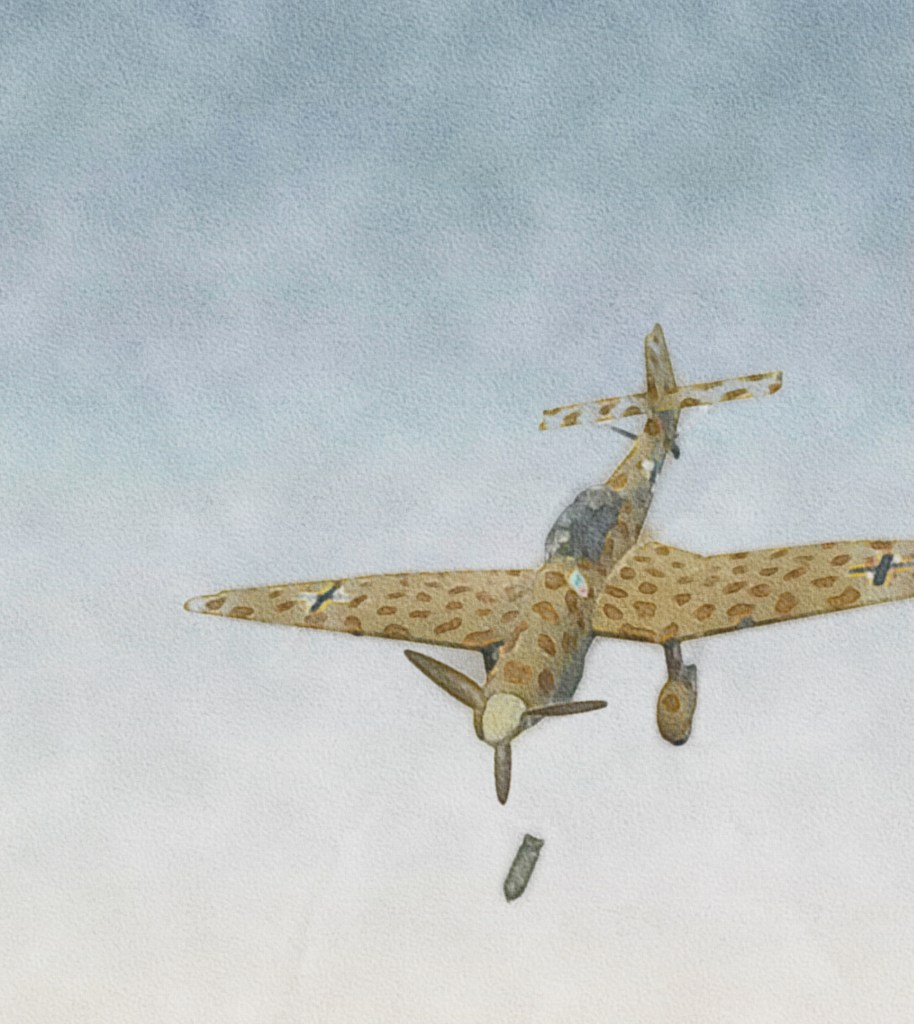
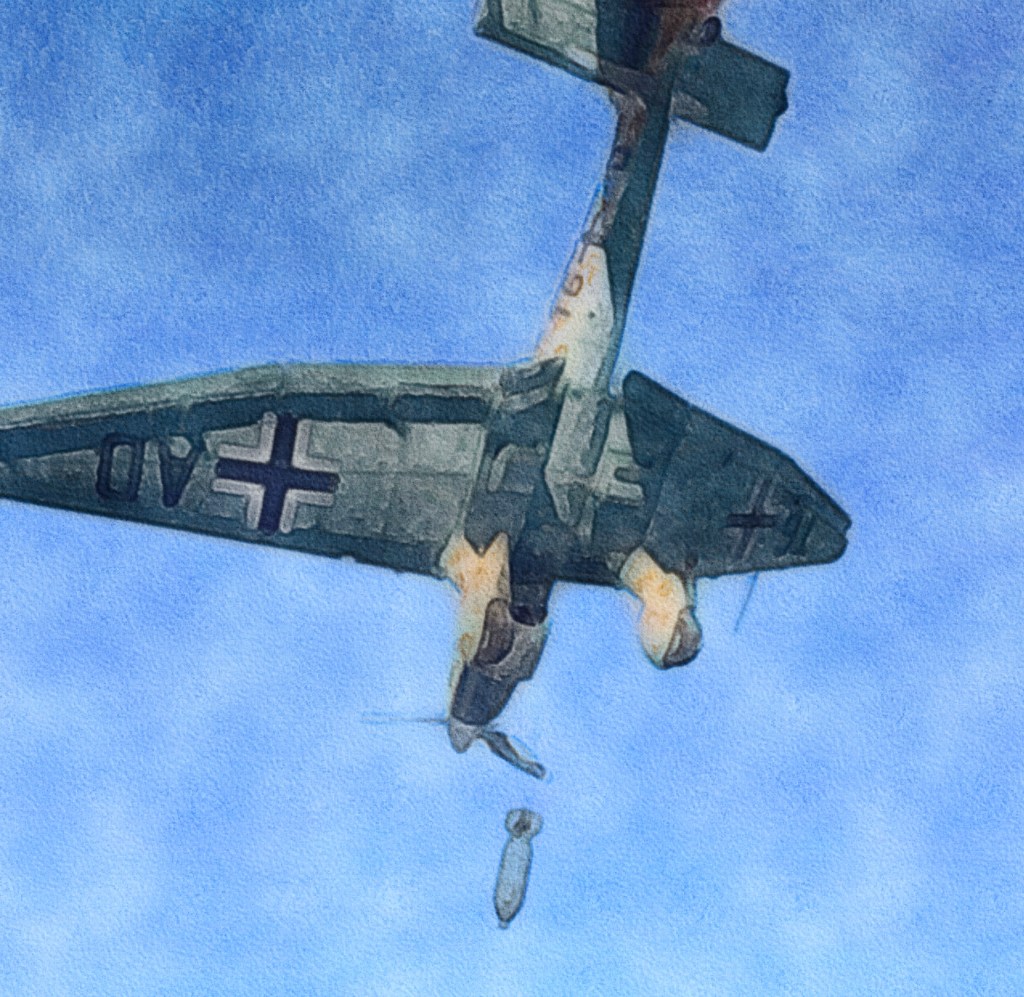
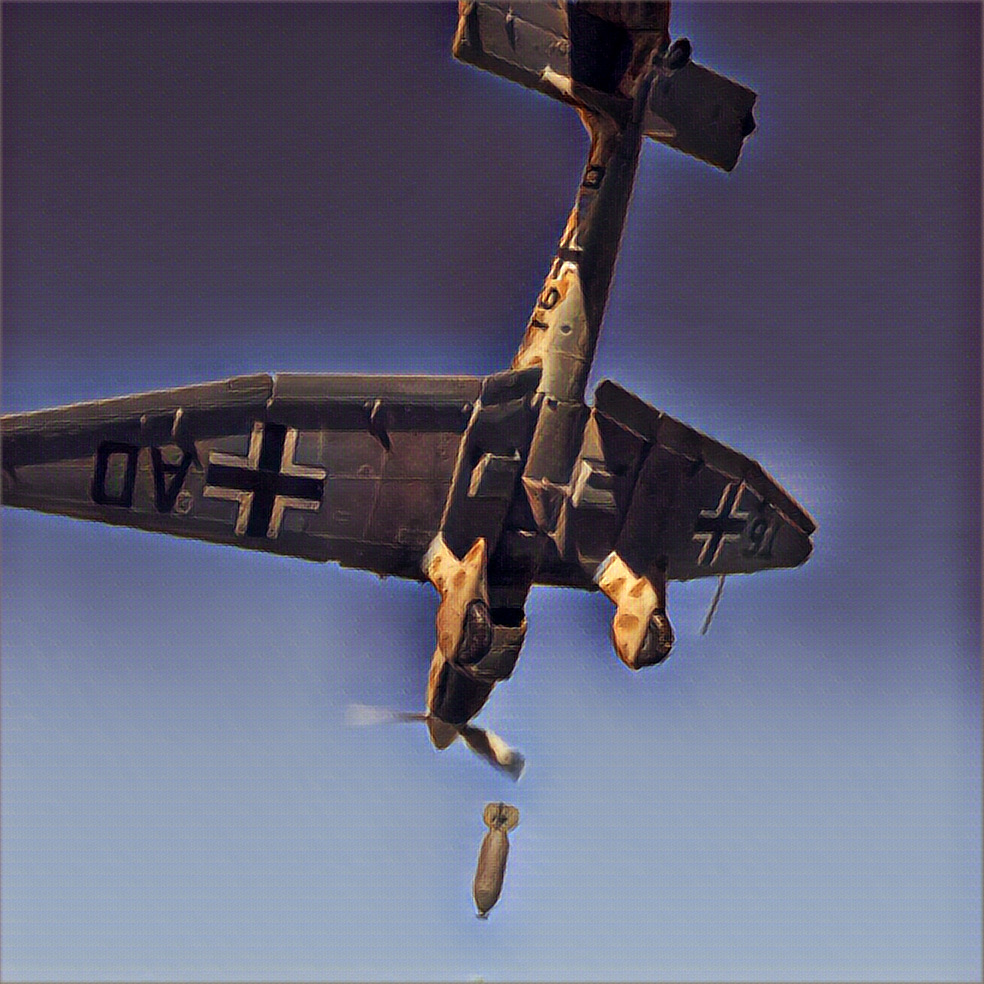
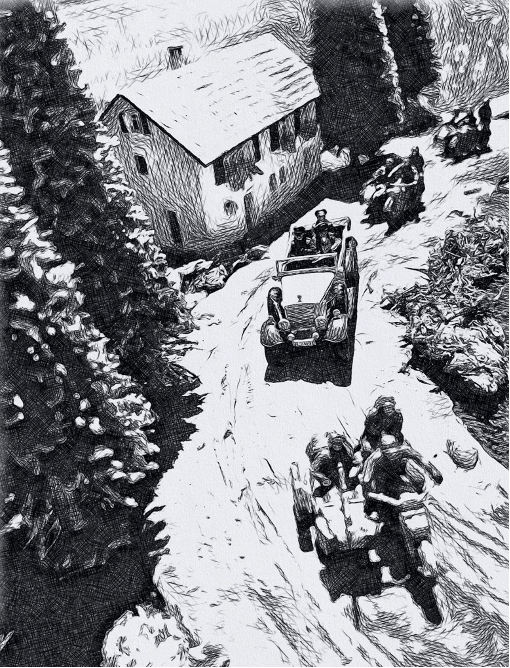
My Instagram friend in Northern California sent me this 1/72 diorama photo of German General Irwin Rommel leaving his Bavarian village on the way to Rome to fly to North Africa (Totally fictional). Rommel landed in Tripoli on February 12, 1941. I treated his photo with “sketch” software.
 WWII in North Africa