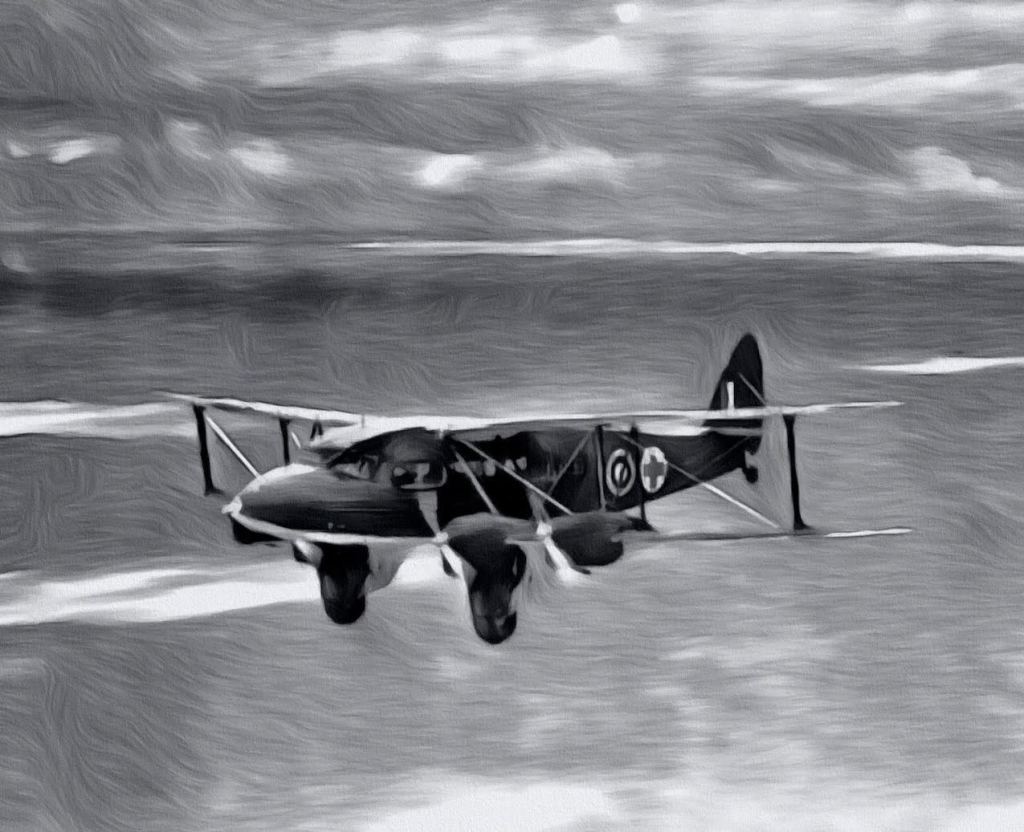
De Havilland D.H.86 Air Ambulance
Bibliography with Notes plus Bonus Content
Anzac Portal. Department of Veteran Affairs. Medical Air Evacuation 1941-1945: History in Focus. https://anzacportal.dva.gov.au/resources/medical-air-evacuation-1941-1945-history-focus
“At the outset of the Second World War it became apparent that the great distances being traversed by the armies demanded a rapid means of evacuating wounded soldiers. Consequently, the Royal Australian Air Force (RAAF) formed Air Ambulance Units (AAU) and Medical Air Evacuation Transport Units (MAETU).”
Anzac Portal. Department of Veteran Affairs, Medical Air Evacuation 1941-1945: History in Focus. https://anzacportal.dva.gov.au/resources/medical-air-evacuation-1941-1945-history-focus
“In early 1941 the RAAF raised No. 1 AAU… The unit was dispatched to the Middle East and flew its first medivac (medical evacuation) mission in August 1941. A male orderly would accompany the wounded on each flight. The unit supported the British Eighth Army in its campaigns across North Africa, Sicily and Italy, and returned to Australia in 1944.”
Anzac Portal. Department of Veteran Affairs, Medical Air Evacuation 1941-1945: History in Focus. https://anzacportal.dva.gov.au/resources/medical-air-evacuation-1941-1945-history-focus
“A total of forty-seven women were trained as flight nurses during 1944–45. With the end of the war, the MAETUs assisted with the evacuation of many recently released prisoners of war.”
Anzac Portal. Department of Veteran Affairs, Medical Air Evacuation 1941-1945: History in Focus. https://anzacportal.dva.gov.au/resources/medical-air-evacuation-1941-1945-history-focus
“As the war intensified, the large number of casualties required an expansion of the medivac organization. In early 1944 fifteen nurses from the Royal Australian Air Force Nursing Service (RAAFNS) were recruited into the newly formed No. 1 MAETU. The nurses, dubbed ‘flying angels’, were trained in inflight medicine and care, emergency survival procedures, and tropical hygiene.”
BAE Systems. DH 86 Express. https://www.baesystems.com/en/heritage/dh86-express
“Designed to meet the requirements of Qantas airlines, the Australian National Airline…”
Goodall, Geoff. Australian Aviation. DE HAVILLAND DH.86 IN AUSTRALIA. https://www.goodall.com.au/australian-aviation/dh86/dh86.html
“The Australian Civil Aviation Branch’s actions were strongly disputed by the manufacturer and derided by the British Ministry, which in retrospect would appear to have put the prestige of the British aviation industry ahead of safety concerns.”
Mission4Today.com. Forums: Medvac in WW2. https://www.mission4today.com/index.php?name=ForumsPro&file=viewtopic&t=21477
“…one of eight used by the RAAF from 1939 until 1945. Capable of carrying one doctor and up to eight patients (six of whom can be carried on stretchers), these four engine biplanes served … at Cairo…supporting the work of 1 Australian General Hospital …”
Travel+Care International. The Air Ambulance: A History.
https://travelcareair.com/the-air-ambulance-a-history/
“The first known commercial air ambulance was developed to serve the Australian Outback in the late 1920s.”
Wikipedia. de Havviland Express. https://en.wikipedia.org/wiki/De_Havilland_Express
“It was theorized that the center was so far aft that it resulted in loss of control at an altitude too low for the pilot to recover…”
Wikipedia. de Havviland Express. https://en.wikipedia.org/wiki/De_Havilland_Express
“Eight D.H.86A and D.H.86B aircraft were impressed into the Royal Australian Air Force and served…during the War. Some served as air ambulances in the Middle East, while others did sterling work as transport aircraft and air ambulances in Australia and New Guinea.”
Wikipedia. No. 1 Air Ambulance Unit RAAF. https://en.wikipedia.org/wiki/No._1_Air_Ambulance_Unit_RAAF
“The unit supported Commonwealth units during the North African Campaign and Tunisia campaign from December 1941 until the end of the Tunisia campaign in May 1943. No. 1 Air Ambulance Unit was expanded and reequipped with 11 Bristol Bombay aircraft in February 1943.”
Bonus Illustrations
 WWII in North Africa