Italian Fiat G.50
Bibliography with Notes plus Bonus Content
Dunning, Chris. Courage Alone—The Italian Airforce 1940-1943. Manchester: Crecy Publishing Limited, 2010, p. 315.
“The proliferation of types (of aircraft) led to a lack of spares keeping many aircraft on the ground for want of simple components. As an example, a nightmarish situation developed in North Africa where units with compliments of fifty or sixty aircraft had only a dozen or so operable. Sand filters were a particular problem, compounded by the highly inefficient Italian support system.”
Dunning, Chris. Courage Alone—The Italian Airforce 1940-1943. Manchester: Crecy Publishing Limited, 2010, p. 261.
“The first time pilots fired their guns at a target was often in their first combat. Even with later extended training periods, the Italian pilot only flew just over half the hours required for Allied pilots before joining operations. Like the Germans, the aircrew flew for long periods with little or no leave.”
Dunning, Chris. Courage Alone—The Italian Airforce 1940-1943. Manchester: Crecy Publishing Limited, 2010, p. 64.
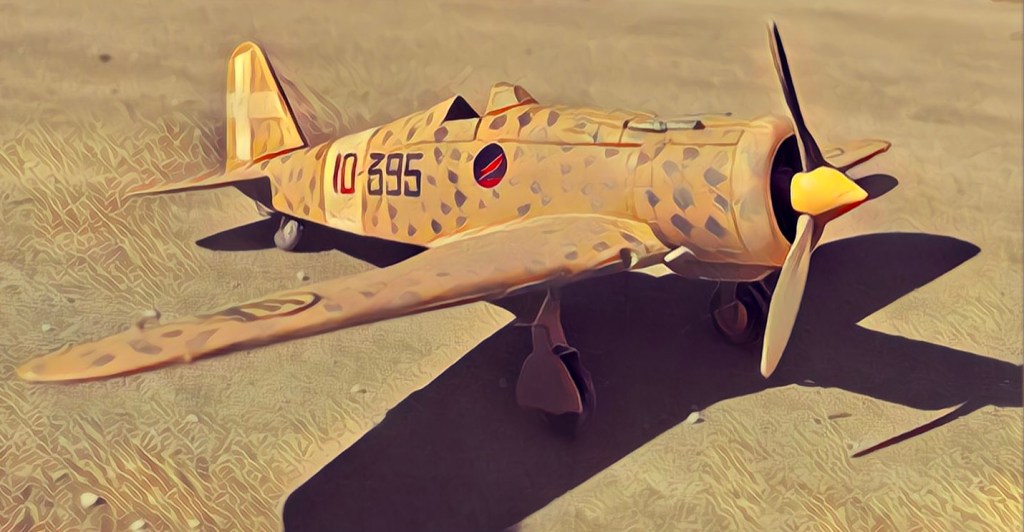
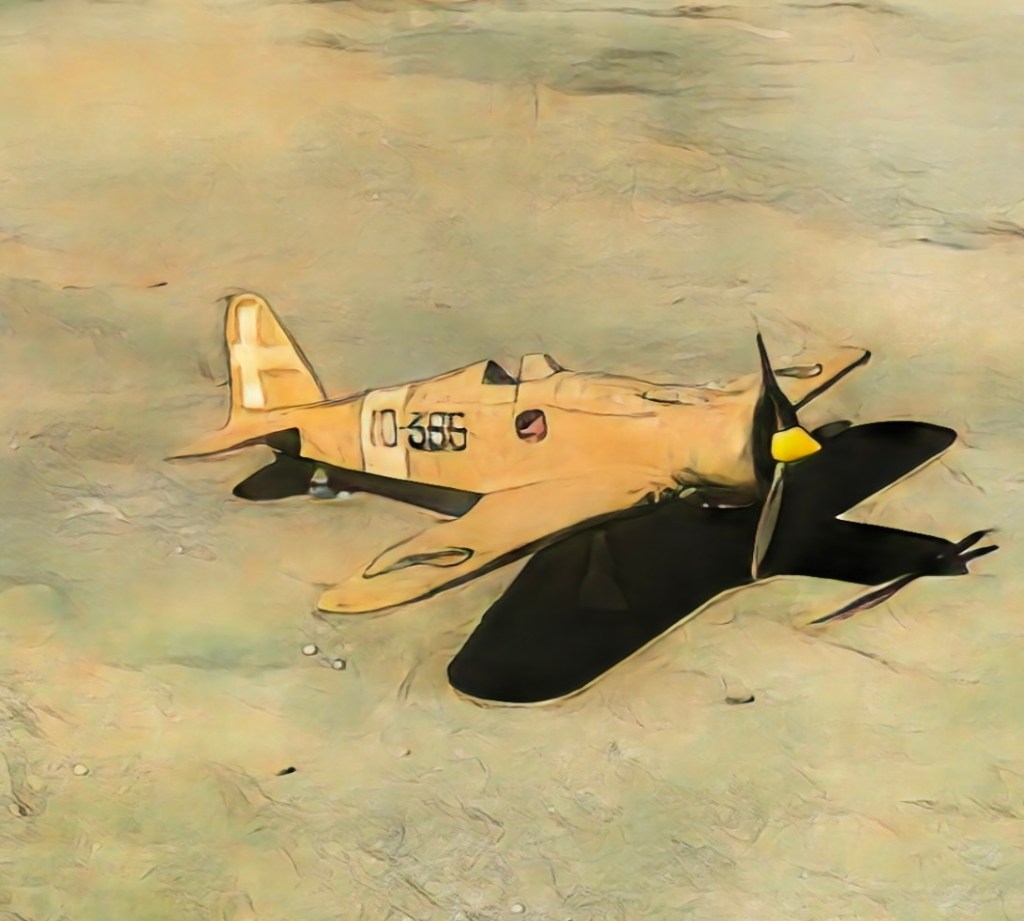
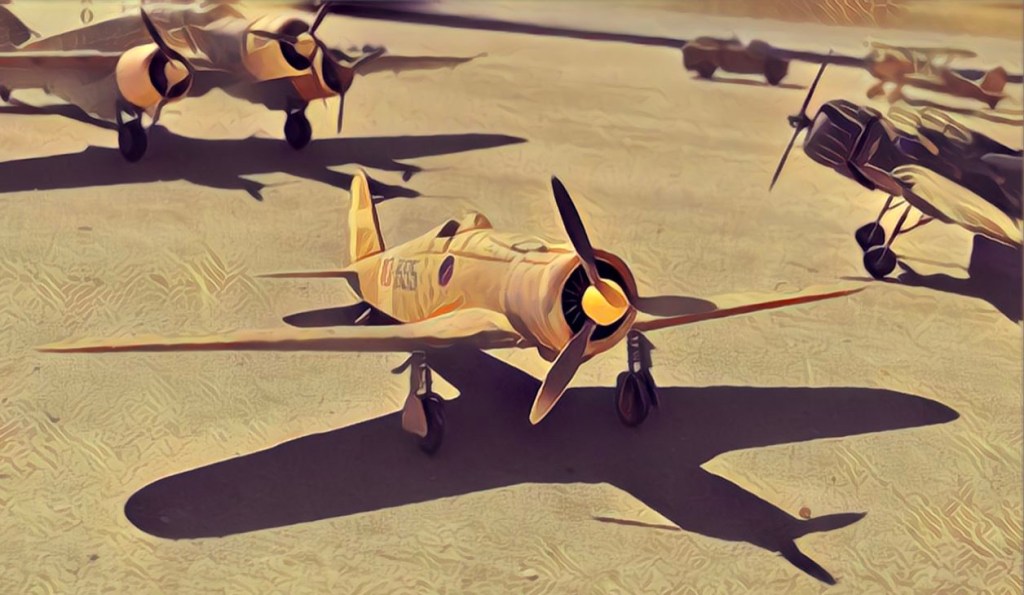
“The aircraft still retains… the original sliding glazed canopy. This was deleted in later batches on account of pilot complaints about poor visibility.”
Shores, Christopher F., and Giovanni Massimello with Russel Guest. A History of the Mediterranean Air War, 1940-1945: Volume One: North Africa. London: Grub Street, 2012. Kindle.
Chapter 6 Reverses and Reinforcements
“…to begin withdrawing its G.50bis fighters to Benghazi where they were to have air filters fitted. Many problems had been experienced due to sand ingestion into the engines.”
Shores, Christopher F, and Giovanni Massimello with Russel Guest. A History of the Mediterranean Air War, 1940-1945: Volume One: North Africa. London: Grub Street, 2012. Kindle.
Chapter 4 Operation Compass
“The day also saw the arrival…[of]Fiat G.50s, the first Italian monoplane fighters to reach Libya. However, no sooner had they arrived at Castel Benito than 27 of them suffered damage during a British bombing raid.”
Wahlert, Glenn. The Western Desert Campaign 1940-1941
(Australian Army Campaigns Series Book 2). Sydney: Big Sky Publishing, 2011. Kindle.
Chapter: Australian, British and Italian Forces
“…The G.50 was considered an improvement on the CR.42. The first G.50 aircraft arrived in North Africa January 1941.”
Wahlert, Glenn. The Western Desert Campaign 1940-1941
(Australian Army Campaigns Series Book 2). Sydney: Big Sky Publishing, 2011. Kindle.
Chapter: Weapons List
“The initial version G.50 had an enclosed cockpit, but the pilots, who were more accustomed to the open bi-plane cockpits, did not like this so it was removed in later versions. The first G.50 aircraft arrived in January 1941…Future variants of the G.50 included a refined fuselage and armour, but it continued to be outclassed by British, U.S. and German fighters.”
Bonus Illustrations
 WWII in North Africa