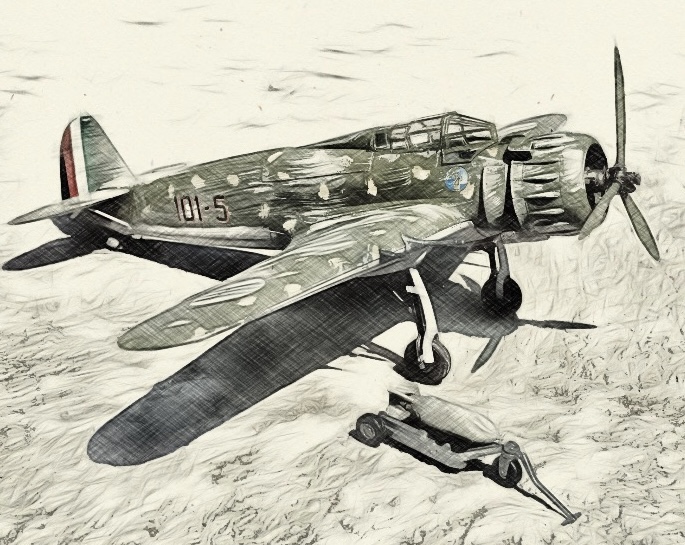
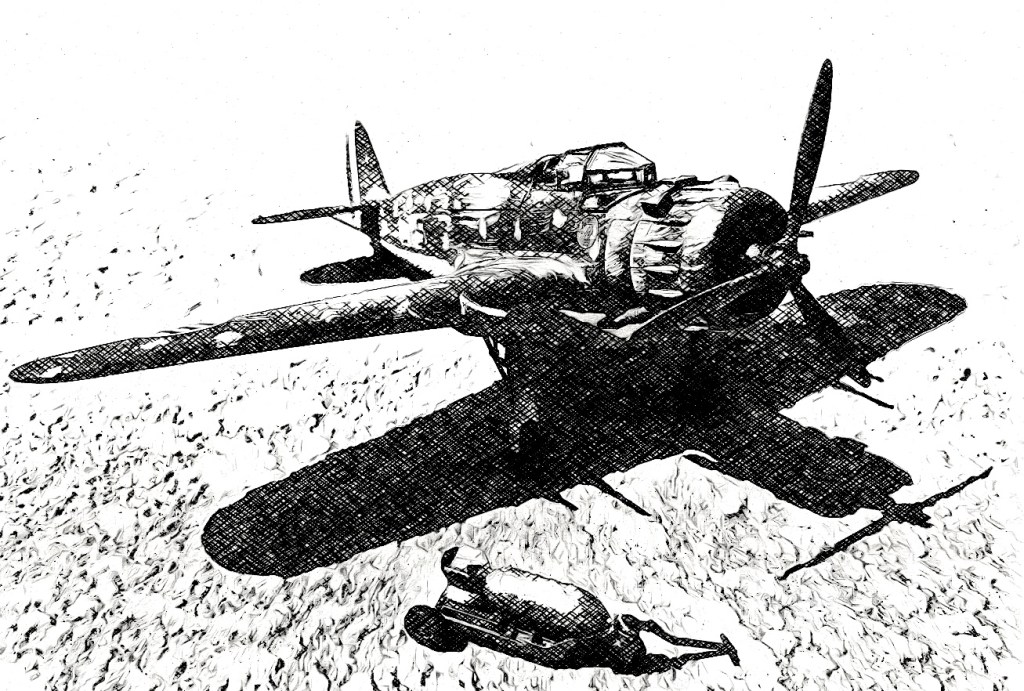
Bad By Design: The Italian Breda Ba. 65
Bibliography with Notes plus Bonus Content
Dunning, Chris. Courage Alone—The Italian Airforce 1940-1943. Manchester: Crecy Publishing Limited, 2010. Page 53.
“Sand in the engines proved to be nearly as big a danger to the Bredas as enemy fire; all had been lost by the end of February 1941.”
Hanson, Robert. Breda Ba.65 Fighter-Bomber Aircraft. Comando Supremo—Italy in WW2. https://comandosupremo.com/breda-ba65/
“When Italy searched for a design capable of performing numerous roles – ground attack, dogfighting, reconnaissance – they chose the Ba.64 as their solution. The Ba.65 was an answer to the deficiency revealed in the Ba.64. While intended to serve as a fighter and bomber, the Ba.64 suffered from terrible flight characteristics which prohibited it from engaging other aircraft…”
Hanson, Robert. Breda Ba.65 Fighter-Bomber Aircraft. Comando Supremo—Italy in WW2. https://comandosupremo.com/breda-ba65/
“Despite its known weaknesses, the failure of other efforts to provide a ground attack platform kept 150 Ba.65’s in service. At the outbreak of war with Britain, they suffered badly in combat with Hurricanes and Spitfires…Italo Balbo requested a replacement aircraft before the initiation of hostilities against Great Britain, but no other adequate aircraft were available. They suffered particularly heavy losses in the course of Operation Compass, which concluded in February 1941. Few, if any Breda Ba.65’s survived.”
Hanson, Robert. Breda Ba.65 Fighter-Bomber Aircraft. Comando Supremo—Italy in WW2. https://comandosupremo.com/breda-ba65/
“While a marked improvement over the Ba.64, which was a threat to no one more than its own pilot, it still took little time to be judged unsuitable for war. Breda and Caproni produced only 218 of the aircraft prior to the plane being officially retired in 1941.”
Shores, Christopher F., and Giovanni Massimello with Russel Guest. A History of the Mediterranean Air War, 1940-1945: Volume One: North Africa. London: Grub Street, 2012. Kindle.
Chapter 2 The Opening Rounds
“…equipped with the Breda Ba.88 Lince—a new twin-engine ground attack aircraft of very streamlined appearance, of which much was expected….but the aircraft would prove a great disappointment. Somewhat underpowered by its 1,000 h.p. Piaggio P.XI R.C. engines, the fitting of sand filters to these caused them to overheat, and also slowed the aircraft by creating increased drag. Within two days only 13 of the 32 aircraft on strength were serviceable.”
Shores, Christopher F., and Giovanni Massimello with Russel Guest. A History of the Mediterranean Air War, 1940-1945: Volume One: North Africa. London: Grub Street, 2012. Kindle.
Chapter 2 The Opening Rounds
“Saturday, 15 June 1940
The day was marked by the first operational sorties made by the Breda Ba.65s.”
Shores, Christopher F., and Giovanni Massimello with Russel Guest. A History of the Mediterranean Air War, 1940-1945: Volume One: North Africa. London: Grub Street, 2012. Kindle.
Chapter 3 Graziani Makes A Move
“The last action of this unfortunate type of aircraft (Ba.88) was carried out on 15 October 1940.”
Wahlert, Glenn. The Western Desert Campaign 1940-1941
(Australian Army Campaigns Series Book 2). Sydney: Big Sky Publishing, 2011. Kindle.
Chapter: Australian, British and Italian Forces
“One point worthy of note is that the RAF had a great deal of experience in tropicalising (sic) its aircraft to keep the sand out of its engines. Failure to adequately proof their aircraft against the destructive desert climate was to dog the Italians throughout the campaign.”
Bonus Illustrations
 WWII in North Africa