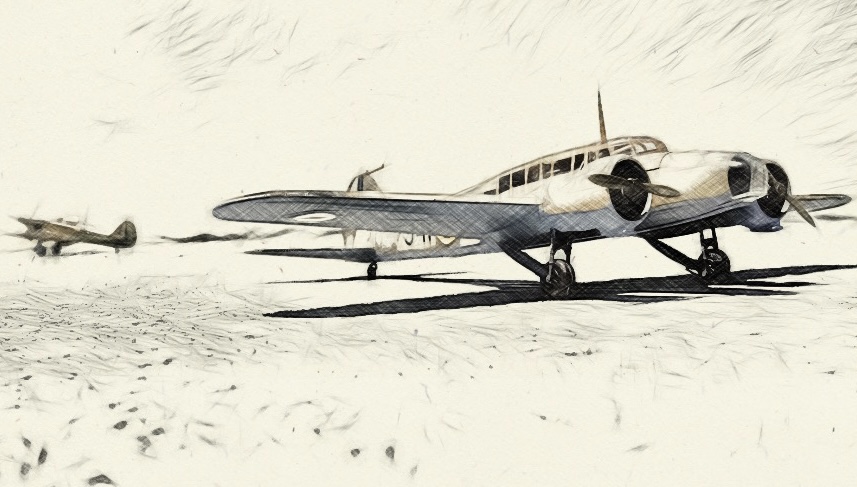
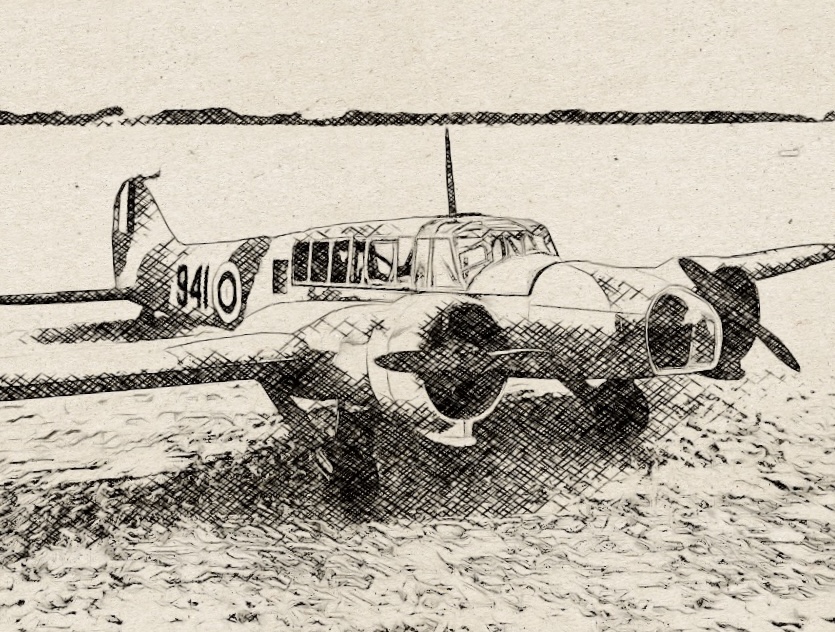
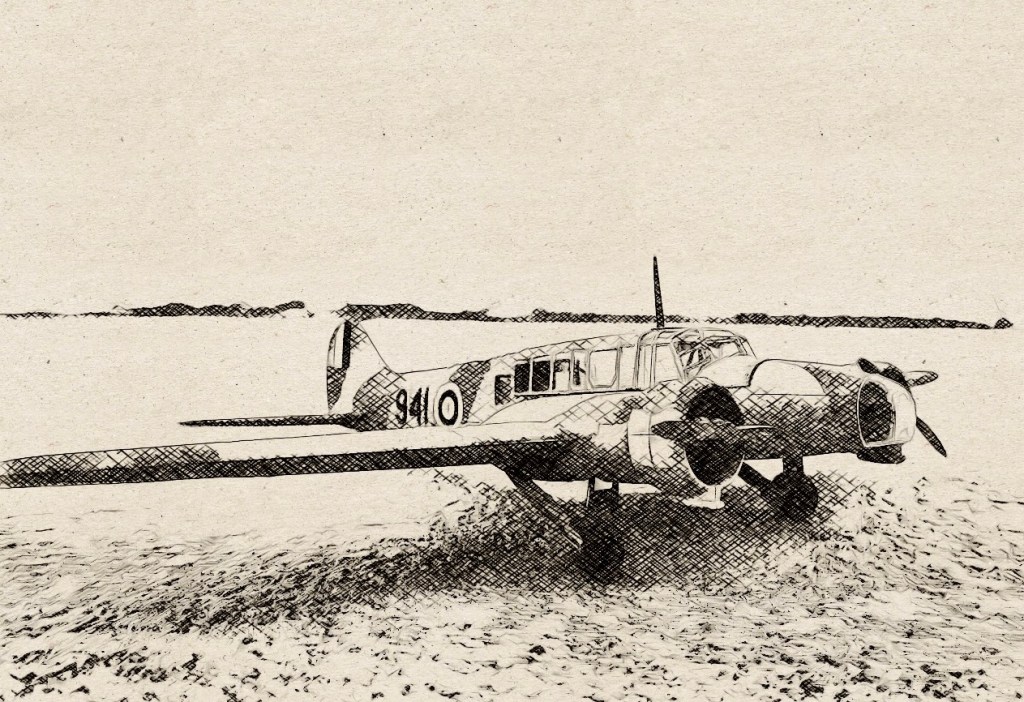
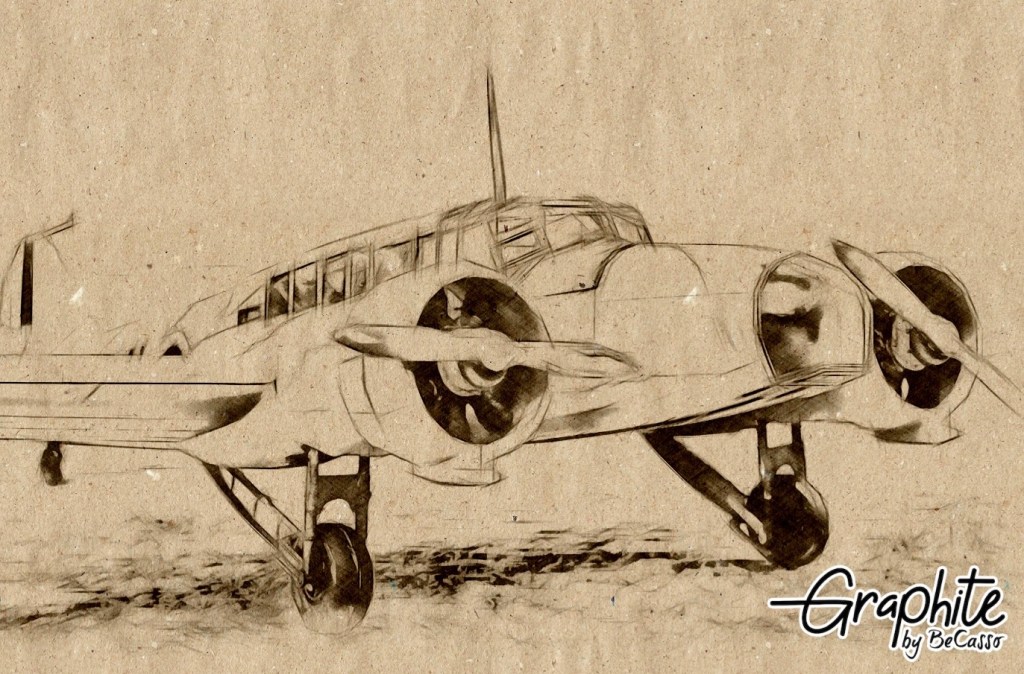
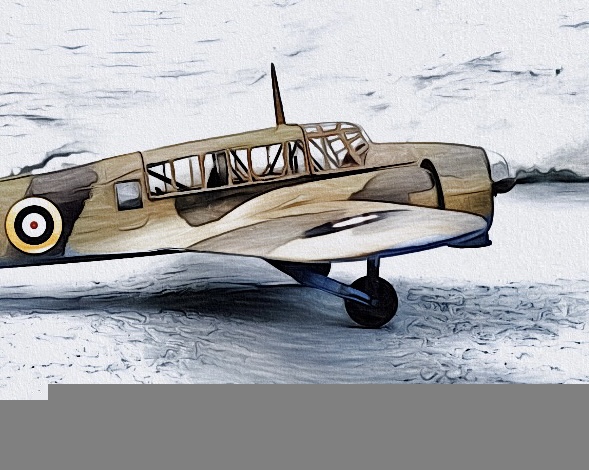
Avro Anson: British Desert Taxi
Bibliography with Notes plus Bonus Content
Classic Warbirds. Avro Anson. https://www.classicwarbirds.co.uk/british-aircraft/avro-anson.php
“…and featured manual landing gear which required 144 turns of a crank handle to retract.”
Classic Warbirds. Avro Anson. https://www.classicwarbirds.co.uk/british-aircraft/avro-anson.php
“With the introduction of the British Commonwealth Air Training Plan on the 18th December 1939 the Anson would be used to train pilots, wireless operators, bomb-aimers and navigators…”
Cooper, Artemis. Cairo in the War 1939-1945. London: John Murray (Publishers), 2013. Kindle.
“In 1940 and 1941, films to be seen in Cairo included Broadway Serenade, Elizabeth and Essex, Mutiny on the Bounty, Gone With The Wind and The Great Dictator.”
Author’s Note: Hitching a ride back to Cairo on an Anson, these are some of the movies that might have been showing. Imagine watching Gone With The Wind then flying back to your base deep in the desert the next day!
These jaunts were reserved for officers. The average British or Commonwealth soldier had little to no control over his movements.
Delve, Ken. The Desert Air Force in WWII: Air Power in the Western Desert 1940-1942. South Yorkshire: Pen & Sword Books, Ltd, 2017. Kindle.
Chapter: 2: Beating the Italians in the Desert
“Another aspect that was to be a feature of the campaigns in the North African theatre was the use of advanced airfields. ‘The use of enemy captured and consequently forward landing grounds has been utilized for rearming and refueling’…the shorter time from airfield to target were key elements in Air Support.”
Military History Fandom. Partial List of British Landing Grounds in North Africa. https://military-history.fandom.com/wiki/List_of_North_African_airfields_during_World_War_II
“This is a partial list of British Landing Grounds (LG) In North Africa, used during World War II. There are over 250 known however some coordinates may be incorrect. It should also be noted that not all of these were active airfields, some were depots, some were repair stations, and of course the ever popular decoy.”
Rainier RE, Major Peter. Pipeline to Battle: An Engineer’s Adventures with the British Eighth Army. Auckland: Pickle Partners Publishing, 2013. Kindle.
PART ONE Chapter 5: Life with the R. A. F.
“…To get to Cairo I would hitch-hike a bomber. There was an antiquated—even by our standards—Anson bomber which used to leave Cairo at daybreak each morning, drop the official air-force mail at all the desert landing fields till it fetched up at Quesaba, the most forward of them all. At Quesaba, Stirling, the pilot, would stay for lunch and drinks, with the emphasis on the latter, before starting his homeward run as postman. It was easy enough to stow away with Stirling. A couple of Gins always put him in the right frame of mind…The first time I rode with him was bad enough. He hedge-hopped across the desert, almost touching the barren rocky ridges with the landing wheels he persisted in leaving down.”
Royal Airforce Museum. Avro Anson I. https://www.rafmuseum.org.uk/research/collections/avro-anson-1/
“The Avro Anson was slow, cold and noisy and is the most famous British aircrew trainer of all time. Used in huge numbers, ‘Faithful Annie’ is remembered with affection by most of Royal Air Force-trained multi-engine aircrew of World War Two.
“The Anson I began life in the mid-1930s as a coastal reconnaissance aircraft. Although an advanced design at the time, rapid improvements in aircraft performance meant that the Anson was hopelessly outclassed when war broke out in September 1939.”
Shores, Christopher F., and Giovanni Massimello with Russel Guest. A History of the Mediterranean Air War, 1940-1945: Volume One: North Africa. London: Grub Street, 2012. Kindle.
Chapter 3 Graziani Makes a Move
“Also at Heliopolis [ancient Egyptian city] a new squadron had been formed on 19 August from the airfield’s Communications Flight. 267 Squadron’s main duties were to be the delivery of mail and the carriage of VIPs, and for these purposes its initial equipment included examples of the Proctor I, Anson I, Magister I, Hudson I, Hind, Vega Gull and Percival Q6.”
Bonus Illustrations
 WWII in North Africa