Friendly Fire
Bibliography with Notes plus Bonus Content
Bickers, Richard Townshend. The Desert Air war: a gripping historical account of the RAF’s role in North Africa during World War II. UK: Lume Books, 2018. Kindle.
Chapter Two
“The pilots of five 80 Squadron Gladiators, who made an unsuccessful attempt to intercept the bombers, experienced a hazard that soon became familiar to all aircrew by day and night: the ‘friendly’ anti-aircraft gunners tried to shoot them out of the sky. If the Army wasn’t blasting off at the R.A.F., the Navy would oblige whenever an aircraft strayed close enough.”
Bickers, Richard Townshend. The Desert Air war: a gripping historical account of the RAF’s role in North Africa during World War II. UK: Lume Books, 2018. Kindle.
Chapter Two
“Later that day the world lost one of its most renowned pilots. Marshal Italo Balbo, Governor or Libya. In 1933 he had led twenty-three aircraft from Rome to Chicago in the world’s record long-distance formation flight, a phenomenal feat of immense significance in the history of aviation. The R.A.F. paid tribute to it by instituting a new noun, ‘balbo’, to refer to any large formation. Flying near Tobruk he was shot down by an Italian anti-aircraft gun and killed. Collishaw sent a Blenheim to drop a wreath at his funeral.”
Judd, Brandon. The Desert Railway: The New Zealand Railway Group in North Africa and the Middle East during the Second World War. Auckland: Publishing Press, 2003. https://www.nzsappers.org.nz/wp-content/uploads/2020/04/The-Desert-Railway.pdf
Chapter 5 EL DAABA AND MERSA MATRUH
“…Anti-aircraft batteries manned by Egyptian soldiers went into action at Mersa Matruh in the first weeks of the war… ” p. 67.
“The defences around the camp were ineffective in the extreme. Several wooden ‘gun barrels’ pointed towards the sky in the vain hope that they might frighten off the aerial raiders, ” p. 68.
Latimer, Jon. Operation Compass. Oxford: Osprey Publishing, 2000. Kindle.
Chapter: The Opposing Commanders
“On 28 June, Italian anti-aircraft gunners in Tobruk shot down their commander-in-chief, Maresciallo Italo Balbo, as he was returning from Rome. Although a British air raid was taking place at the time and it was almost certainly accidental … The RAF dropped a note of regret and a wreath that was graciously acknowledged and Italy had lost its best commander.”
Roba, Jean-Louis. Luftwaffe in Africa, 1941-1943 (Casemate/Illustrated). Havertown, PA: Casemate Publishers, 2019.
Introduction: The Italian Offensive
“…Marshal Pietro Bodoglio sent a telegram to Balbo affirming that he should be ready to invade Egypt on July 15. But Balbo had been killed earlier that same day, victim of a confused antiaircraft battery that had shot down his aircraft, mistaking it for a Royal Air Force (RAF) bomber.”
Rothwell, Steve. Military Ally or Liability, The Egyptian Army 1936-42.
British and Commonwealth Order of Battle, https://homepages.force9.net/rothwell/Egypt.htm
British Preparations for War
“Never pro-British at the best of times, the Egyptians were further disenchanted by British slowness to reinforce the country as the war clouds gathered. In August 1939, Egypt had agreed to participate in its own defense: providing patrols along the western frontier; defending the desert south-west of Cairo; protecting the railway between Alexandria and Mersa Matruh; providing units to help defend Alexandria (including coastal artillery) and to protect against sabotage.”
Shores, Christopher F., and Giovanni Massimello with Russel Guest. A History of the Mediterranean Air War, 1940-1945: Volume One: North Africa. London: Grub Street, 2012. Kindle.
Chapter 2 The Opening Rounds
“…The leading aircraft was carrying Marshal Italo Balbo, famous for having led formations of flying boats on goodwill tours before the war, and after whom the word ‘Balbo’ had been applied to large formations of aircraft…The airfield’s defences mistook the arrivals for more British raiders and opened fire at once. Balbo’s aircraft was hit and crashed in flames, killing all aboard, although Porro’s (plane) managed to escape. Upon learning of this, Collishaw arranged for a Blenheim to drop a large wreath at the funeral when it took place.”
Shores, Christopher F., and Giovanni Massimello with Russel Guest. A History of the Mediterranean Air War, 1940-1945: Volume One: North Africa. London: Grub Street, 2012. Kindle.
Chapter 4 Operation Compass
“AA defences (sic) locally were spread 50% around Alexandria, the balance at Cairo. Half the Alexandria guns were manned by the Egyptian army, as were 100% of those around Cairo…those defending Alexandria quite willingly opened fire on raiders, while Cairo was never to be bombed, so the question never arose.”
Wahlert, Glenn. The Western Desert Campaign 1940-1941
(Australian Army Campaigns Series Book 2). Sydney: Big Sky Publishing, 2011. Kindle.
Chapter: The Leaders
“On 28 June 1940 Marshal Italo Balbo…Commander-in-Chief of Italy’s forces in Libya, was killed when his aircraft was shot down over Tobruk by anti-aircraft gunners from the cruiser San Giorgio which was riding at anchor in the harbor.”
Bonus Illustrations
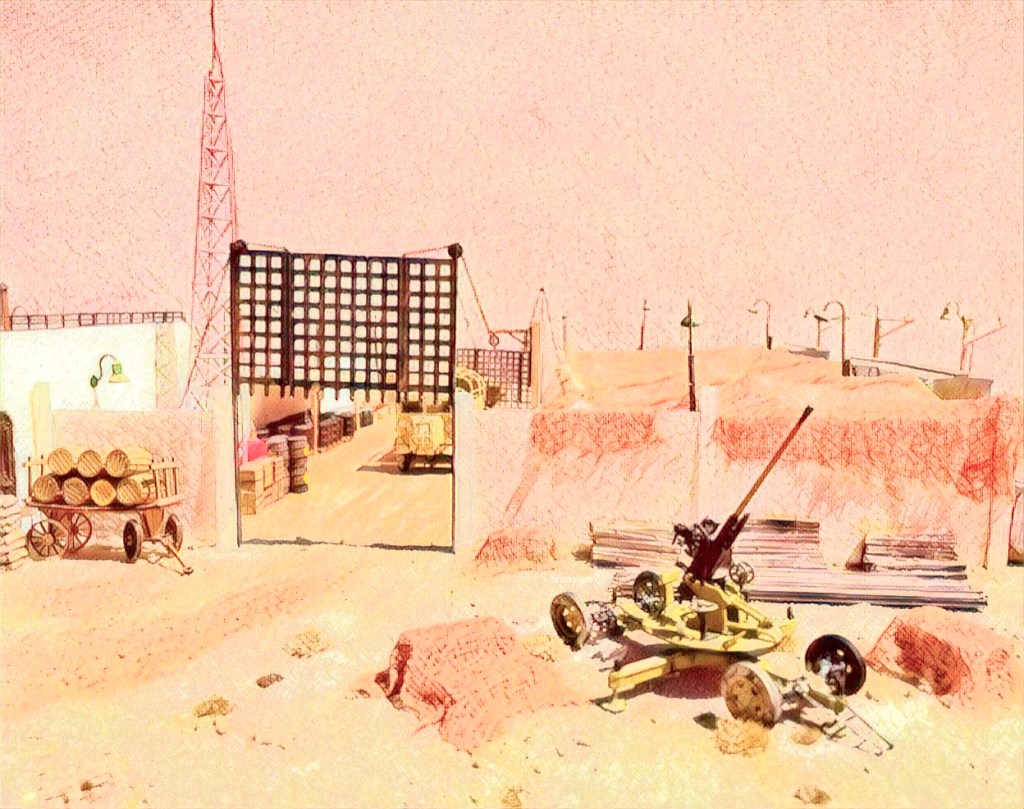
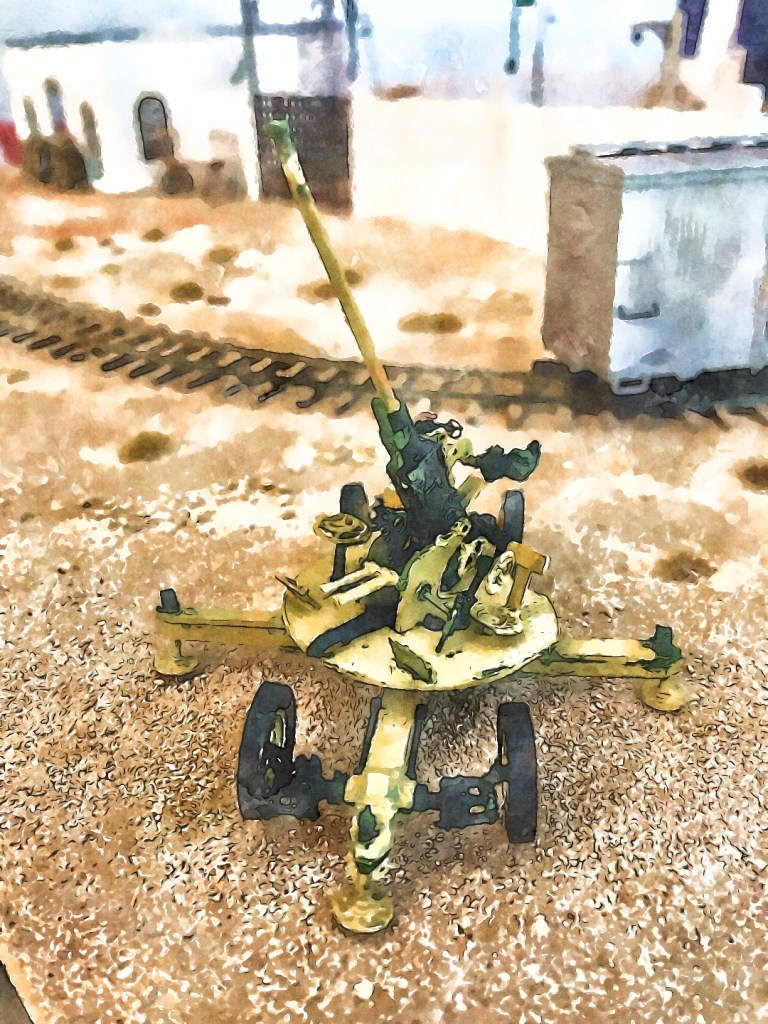
 WWII in North Africa