June 11, 1940–British Blenheim Bombers Strike First
Bibliography with Notes plus Bonus Content
Bickers, Richard Townshend. The Desert Air War: 1939-1945: a gripping historical account of the RAF’s role in North Africa during World War II. London: Lume Books, 2018.
Chapter Four
“…The pilot pulled the stick back and scraped over the ship. The aerial strung between the fore and aft masts went with him, wrapped around the external bomb racks…”
Bickers, Richard Townshend. The Desert Air War: 1939-1945: a gripping historical account of the RAF’s role in North Africa during World War II. London: Lume Books, 2018.
Chapter Four
“Far from the mechanical amenities of a permanent airfield, bombing-up a Blenheim with 250 lb bombs called for ingenuity and immense physical effort…One man at the nose and another at the tail would lift the bomb while the third knelt and got his back under it…A good crew could bomb up a kite in seven to ten minutes.”
Bickers, Richard Townshend. The Desert Air War: 1939-1945: a gripping historical account of the RAF’s role in North Africa during World War II. London: Lume Books, 2018.
Chapter Seven
“Our aircraft came back with telephone wires wrapped around wing and fuselage.”
Delve, Ken. The Desert Air Force in WWII: Air Power in the Western Desert 1940-1942. South Yorkshire: Pen & Sword Books, Ltd, 2017. Kindle.
Chapter 3: From Victory to Defeat and Stalemate
“Everyone is firing at you, and although most of them are wide of the mark, it is easy to run into a stray bullet.”
Delve, Ken. The Desert Air Force in WWII: Air Power in the Western Desert 1940-1942. South Yorkshire: Pen & Sword Books, Ltd, 2017. Kindle.
Chapter 3: From Victory to Defeat and Stalemate
“…ordered all fighters to concentrate on ground strafing…Tomahawks of 250 Squadron concentrating on the main Capuzzo-El Adem roads. Although effective, this was relatively costly, as four pilots including one Australian were lost on one such operation.”
Delve, Ken. The Desert Air Force in WWII: Air Power in the Western Desert 1940-1942. South Yorkshire: Pen & Sword Books, Ltd, 2017. Kindle.
Chapter 3: From Victory to Defeat and Stalemate
“ All the pilots seemed ‘browned off’ with this ground strafing—we are losing too many machines which we can ill afford to do and the ultimate results put us very much on the debit side.”
Shores, Christopher F., and Giovanni Massimello with Russel Guest. A History of the Mediterranean Air War, 1940-1945: Volume One: North Africa. London: Grub Street, 2012. Kindle.
Chapter 2 The Opening Rounds
“…two hours later 45 Squadron was to send eight more Blenheims on a low level attack on T3 airfield at El Adem. Here base personnel were seen formed up on the parade ground, apparently to hear a proclamation from Marshal Graziani announcing the outbreak of hostilities…”
Shores, Christopher F., and Giovanni Massimello with Russel Guest. A History of the Mediterranean Air War, 1940-1945: Volume One: North Africa. London: Grub Street, 2012. Kindle.
Chapter 6 Reverses and Reinforcements
“…The poor profit/loss ratio was increased by the fact that we did a lot of ground attacks on airfields, where we lost heavily to German light Flak. Our role was to keep up appearance of participation, so that the Army should not feel deserted by the Air Force, but the heavy cost of this was known, and we were urged to hold out until the Desert Air Force could be reinforced with new fighter squadrons.”
Wahlert, Glenn. The Western Desert Campaign 1940-1941
(Australian Army Campaigns Series Book 2). Sydney: Big Sky Publishing, 2011. Kindle.
Chapter: Australian, British and Italian Forces
“The Mk. I Blenheim was first commissioned into service with the RAF in 1937 and saw a great deal of action during Wavell’s 1940-1941 offensive, primarily as a light bomber, but also misemployed in a ground attack and even fighter role, due to the shortage of RAF assets.”
Wahlert, Glenn. The Western Desert Campaign 1940-1941
(Australian Army Campaigns Series Book 2). Sydney: Big Sky Publishing, 2011. Kindle.
Chapter: Australian, British and Italian Forces
“…In mid-1940 the RAF only had 96 bombers, mainly early versions of the Blenheim, and about 85 Gladiator biplanes…with the Blenheim often forced to serve in a fighter role.”
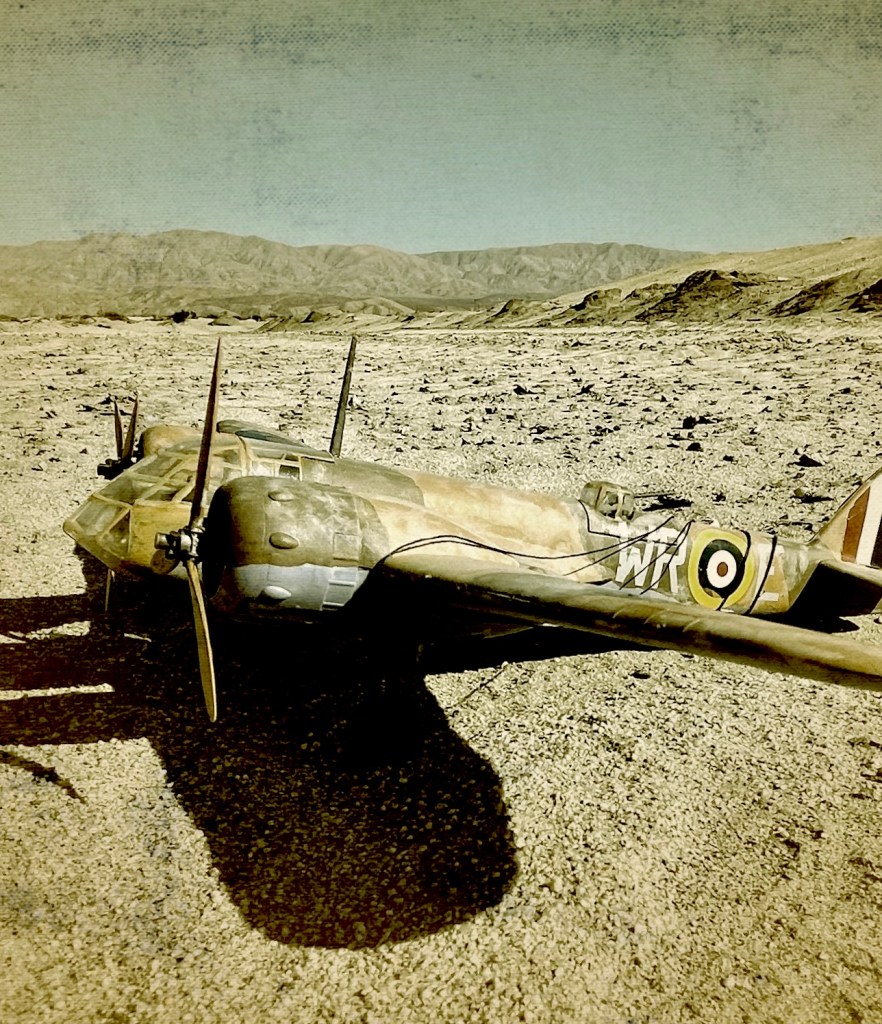
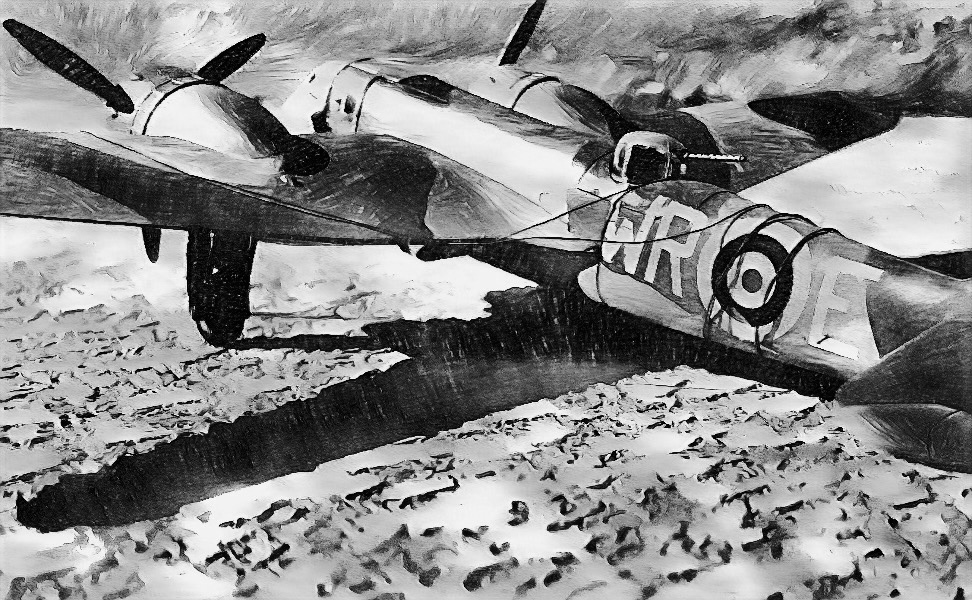
Bonus Illustrations
 WWII in North Africa