June 10, 1940: Italy Declares War on Great Britain and France
Bibliography with Notes plus Bonus Content
Bierman, John and Colin Smith. War Without Hate. New York: The Penguin Group, 2002, p. 14.
“Out of the vaunted Regia Aeronautica’s 1,700 aircraft, only 900 could really be described as front-line machines. True, Italian aircraft frequently won air races and held speed records, but the best planes were not always the ones the air force got. By the summer of 1940, when British and German fighter pilots were dueling over the south of England in Spitfires, Hurricanes and Messerschmitts—low wing monoplanes with closed cockpits and retractable undercarriages—Italy’s front line fighter was the Fiat CR-42 biplane, a pretty aircraft but at least 100 mph slower.”
Judd, Brandon. The Desert Railway: The New Zealand Railway Group in North Africa and the Middle East during the Second World War. Auckland: Publishing Press, 2003. https://www.nzsappers.org.nz/wp-content/uploads/2020/04/The-Desert-Railway.pdf
Chapter 1 THE CALL FOR VOLUNTEERS
“Italy had a massive army in Libya in 1940, numbering some 215,000 troops- many ‘battle hardened’, having fought and beaten the stubborn but poorly equipped Ethiopians. Opposing them was approximately 36,000 British and Allied troops stationed throughout Egypt. Under threat was the British presence in Egypt and access to resources in the region (primarily oil) and control of the key Suez Canal,” p. 20.
Military Factory.com, Staff Writer. Fiat Cr.42 Falco (Falcon) Biplane Fighter Aircraft (1939). https://www.militaryfactory.com/aircraft/detail.php?aircraft_id=610#specifications
“The system…utilized a sesquiplane biplane approach where the lower wing assembly was shorter than the upper.”
Shores, Christopher F., and Giovanni Massimello with Russel Guest. A History of the Mediterranean Air War, 1940-1945: Volume One: North Africa. London: Grub Street, 2012. Kindle.
Chapter 5 Enter the Luftwaffe
“After the opening days of 1941 the Fiat CR.42 began to lose its fighter role with the Regia Aeronautica in North Africa. Initially the CR.42 began to be replaced by growing numbers of G.50bis…The CR.42s were gradually relegated to the ground attack role, equipped with underwing racks to allow carriage of two 50kg bombs.”
Wahlert, Glenn. The Western Desert Campaign 1940-1941
(Australian Army Campaigns Series Book 2). Sydney: Big Sky Publishing, 2011. Kindle.
Chapter: The Strategic Setting
“The Army’s artillery was outdated and the battalions barely had enough pots and pans to feed their troops. The Italian Airforce (Regia Aeronautica) suffered appalling problems with serviceability, lacked spare parts, and its best fighters were totally outclassed by the British Hurricane.”
Wahlert, Glenn. The Western Desert Campaign 1940-1941
(Australian Army Campaigns Series Book 2). Sydney: Big Sky Publishing, 2011. Kindle.
Chapter: Australian, British and Italian forces
“…However, due to Italy’s inability to produce powerful aero engines, they were underpowered in comparison to other European fighters at the time.”
“…had to be nose mounted which further reduced its rate of fire by having to be synchronized with the propeller.”
“…Additionally, all three of the key Italian fighters during the Western Desert campaign—CR.42, G.50, and MC.200—usually sported only two guns against the Hurricane’s eight.”
Wahlert, Glenn. The Western Desert Campaign 1940-1941
(Australian Army Campaigns Series Book 2). Sydney: Big Sky Publishing, 2011. Kindle.
Chapter: The Strategic Setting
“Italy was as ill prepared for war in June 1940 as she had been in September 1939. Her military commitments in Ethiopia in 1935, Spain in 1936 and Albania in 1939 had seriously depleted her military inventory, stressed her industrial economic base, and highlighted serious shortcomings in her military forces that had not been addressed.”
Bonus Illustrations
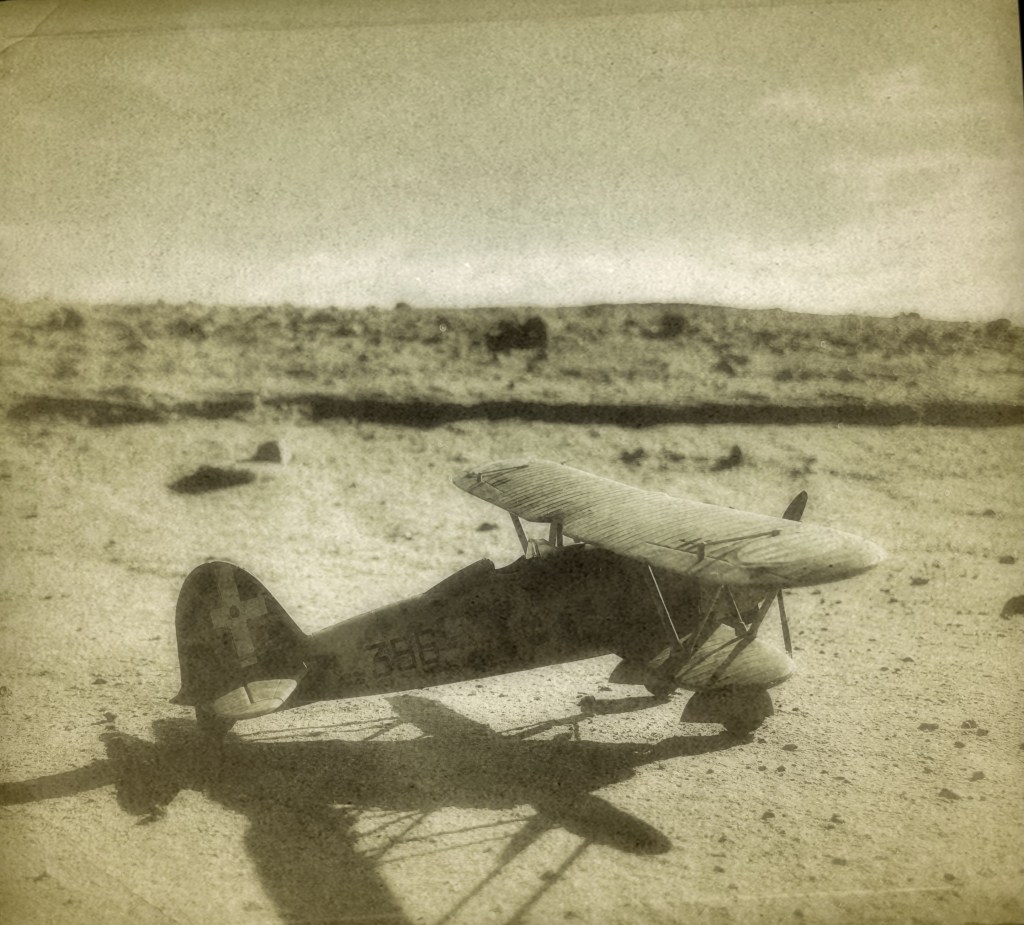
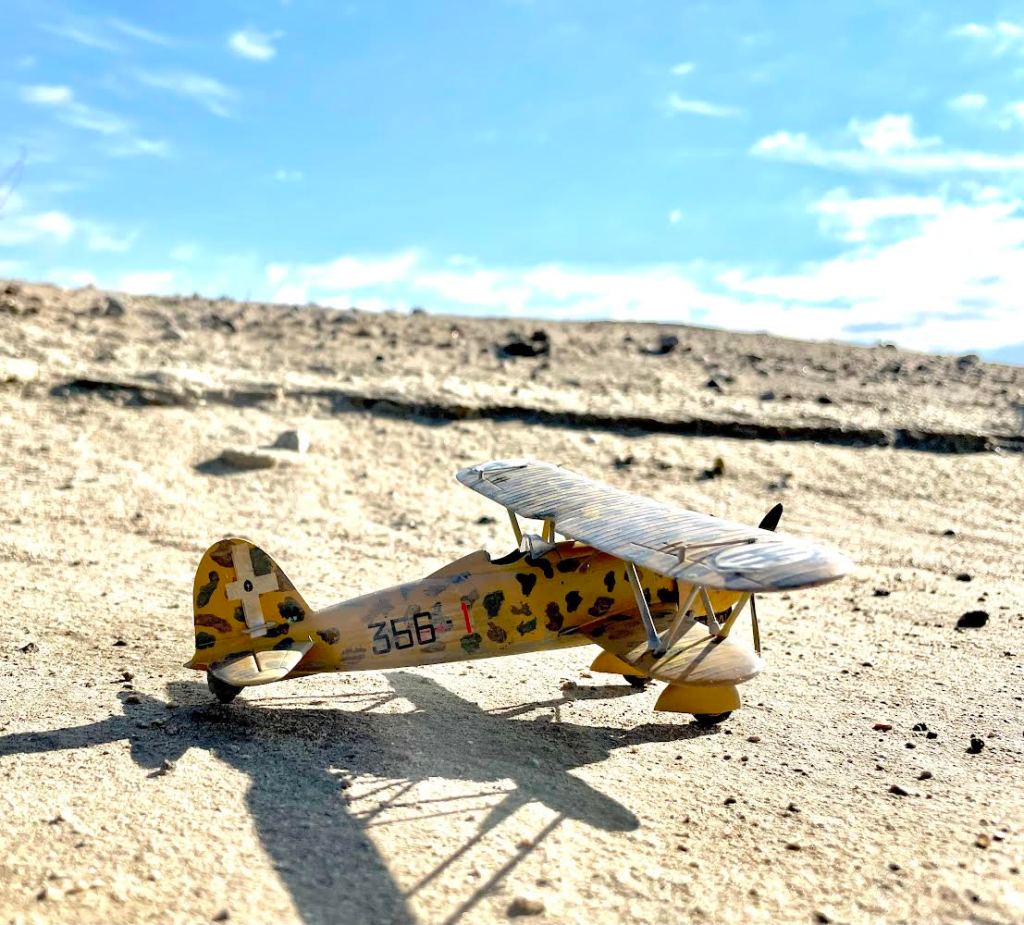
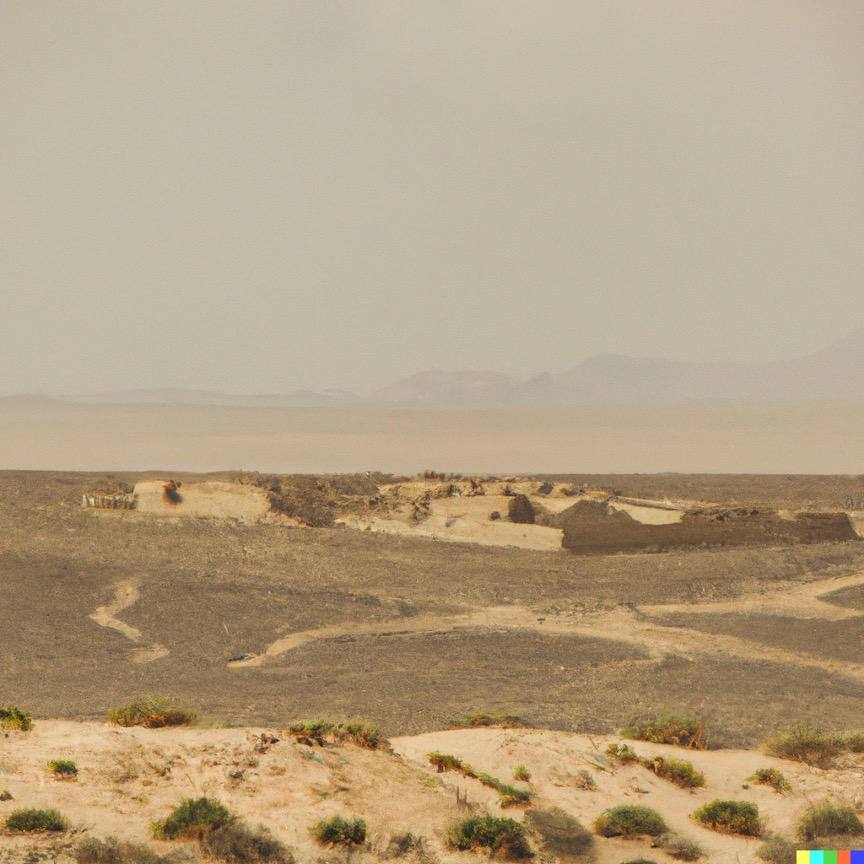
Decided not to use it, but it’s still pretty cool, so I included it here. I manipulated this image for Chapter 3: Weather.
 WWII in North Africa